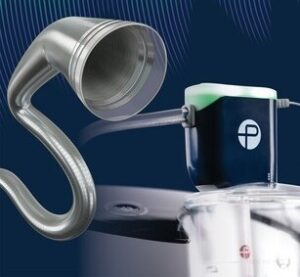
A subanalysis of the STRIKE-PE trial has provided evidence that treatment with the 16Fr Lightning Flash (Penumbra) computer-assisted vacuum thrombectomy (CAVT) device is associated with longer-term benefits, including improvements in functional and quality-of-life outcomes in patients with pulmonary embolism (PE). Results were recently presented by John Moriarty (University of Los Angeles Medical Centre, Los Angeles, USA) at the Cardiovascular and Interventional Radiological Society of Europe (CIRSE) annual congress (5–9 September, Copenhagen, Denmark).
STRIKE-PE is a single-arm, prospective, multicentre study including 1,500 patients with intermediate- or high-risk PE across 77 global sites. Among the first 1,000 patients enrolled, 584 were treated using the 16Fr catheter system—the latest iteration of the device, for which periprocedural data and 30-day endpoints were obtained. Subsequently, functional and quality-of-life outcomes were taken from 208 of these patients at one-year follow-up.
The mean age of the patients was 62.2 years; 54.1% were male. Median thrombectomy time was 25 minutes. Moriarty detailed that “a very significant decrease” in mean right ventricle/left ventricle (RV/LV) ratio was observed, decreasing from 1.36 at baseline to 0.96 at 48 hours. The composite major adverse event rate within 48 hours was 1.5%.
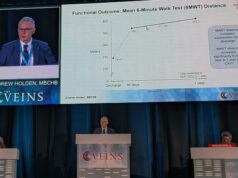
Median Borg dyspnoea scale at rest improved from five at baseline to zero at one year. From 90 days to one year, mean six-minute walk test (6MWT) distance increased from 347.4 to 383.7m. New York Heart Association (NYHA) functional classification distribution at one year was restored to that of patients’ pre-PE functional status.
Moriarty stated that he and his team saw “a very important improvement in [patients’] PE-specific quality-of-life reports across pretty much every metric”. He detailed that, from baseline to one year, mean EQ-5D-5L index value (0.455 to 0.802), mean EuroQol Visual Analogue Scale (EQ VAS; 53.2 to 79.0), and total PEmb-QoL (42.5 to 14.1) improved, with continued improvement from 90 days to one year for EQ VAS and PEmb-QoL.
“We have shown that this is a safe and effective system, with improved RV/LV metrics, a short device time of less than 23 minutes and low complications rates,” stated Moriarty. “The device restored functional status at 90 days, showing that this was a durable result out to one year, and that, objectively, the six-minute walk test continued to show improvement to that year mark.”
Moriarty concluded, adding that improvements in dyspnoea and quality-of-life reports from baseline to 90 days, combined with functional outcomes, provides evidence that treatment with CAVT using the 16Fr catheter system correlates with long-term benefits in patients with PE.