 What are the best approaches for managing arteriovenous fistula (AVF) stenosis? What role should surveillance play in vascular access management? Is innovation in the field progressing and do promising clinical trial results translate into real-world practice? These are among the topics to be tackled in today’s vascular access masterclass session (Theatre 3) at the 2026 Charing Cross (CX) Symposium (CX 2026; 21–23 April, London, UK), in a programme that features several first-time data presentations and case-based learning aimed at building consensus in renal disease and vascular access management.
Treating and preventing stenosis in vascular access “is always a controversial topic”, executive board member Nicholas Inston (Birmingham, UK) tells Vascular News, explaining the focus of the day’s first session, which centres on approaches to AVF stenosis.
“This year we’ll be aiming to bring current evidence together, including some podium-first presentations to try and at least come to some consensus on, perhaps, an algorithmic approach to stenosis, and defining whether or not certain stenoses should be treated differently than others,” he comments.
“I think there’s a lot of variation in practice because we don’t have any consensus from the current evidence as to where and when to best use some of the technologies,” adds fellow executive board member Kate Steiner (Brighton, UK) who points to podium-first presentations from the post-approval studies looking at the IN.PACT AV (Medtronic) drug-coated balloon (DCB) and the Lutonix AV (BD), presented by Sanjay Misra (Rochester, USA) and Dheeraj Rajan (Toronto, Canada) as potentially providing some additional insights in this area.
“It’s fair to say that the evidence that we have so far on the use of DCBs is mixed, and that has meant there’s no widespread adoption, certainly not in Europe and maybe even in the USA, because people aren’t sure when and where to use them and how effective they are,” Steiner comments. “Hopefully with the post-approval studies we’ll get some more evidence as to when we should be using them—is it for de novo or is it for recurrent stenosis—and where do we use them in the access circuit and where should we be using a stent graft?”
The second session, titled ‘Choosing wisely’ will explore the concept at the heart of the Kidney Disease Outcomes Quality Initiative (KDOQI) vascular access guidelines—selecting “the right access, in the right patient, at the right time, for the right reasons”—with a focus on endovascular AVFs and central venous catheters.
“The novel thing here is that we’re starting to talk about central venous catheters again, an area which has been really neglected and vilified, but is very necessary in our practice,” says Inston. “Everyone involved in vascular access has to deal with central venous catheters, and patients have to deal with the complications. If we’re not talking about them, and we’re not analysing how we can make them better, a third of the vascular access portfolio we have is not being used properly.”
Speakers will explore which patients may be suited for an endovascular approach, and what second-generation endoAVFs may bring to the market.
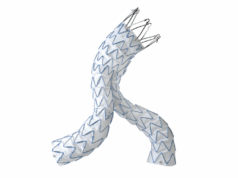
The afternoon session, ‘The science behind the practice’ aims to unpack how industry innovation and clinical trial evidence translate into clinical reality. New data heard during this session will include 12-month results from the aXess study, assessing a restorative vascular access conduit (Xeltis), 12-month data from the AVeNEW study looking at the Covera (BD) vascular covered stent, and 12-month data from the FLEX FIRST registry, studying the Flex vessel prep (VP) system (Flex Vascular). These data presentations will be followed by case-based learning, aimed at applying the science to clinical practice.
“You see all the data, you see the new devices, but then where do they fit in your clinical practice?” says Inston of this session. “We tried to make that a bit of a theme to have some of the evidence and look at the cases, and that makes it really interactive because it picks apart some of the different approaches. You can show a cephalic arch stenosis to members of the audience, and you might get several different approaches to treatment. None of them are wrong, and they will have good outcomes for the patient. But it’s looking at how we can move from that into consensus.”
Debate: Is innovation dead in vascular access?
Inston will go head to head with Anthony Rodriguez (Austin, USA) in a debate on the motion ‘Innovation is dead in vascular access’. Starting at 15:20, Inston will argue for the motion, before Rodriguez, vice president of commercialisation at Laminate Medical Technologies, puts forward his opposing case.
“I was surprised to see this debate on the programme,” says Rodriguez. “I actually think that we are in the golden age of innovation in dialysis access.” Previewing his argument, Rodriguez references successful acquisitions of dialysis-specific innovations in the late 2010s/early 2020s, which he argues, “created an ecosystem of investment and opportunity that has now spawned a myriad of devices”. He points to several emerging innovations, while noting that industry, physicians, payers and investors must all play a role in market adoption.
The day concludes with the renal interventions session, which includes a detailed look at current evidence and guidelines on embolisation for adult polycystic kidney disease.
“Is it something that we should be doing? In which cases, who’s got experience from it and what are the outcomes?” says Steiner. “There’s not a huge amount on it in the literature, but if it’s a technique that’s going to result in significant size reduction and symptoms for patients and it’s an alternative to open surgery, then that’s definitely something that we should be exploring.” During this session, Mohammed Rashid Akhtar (London, UK) will present his experience with the technique.
“To gain experience from a centre that’s treated a large volume of cases, to learn from their algorithm, how it has formed over time, I think this is a particularly valuable session which will have good audience participation,” says Steiner.
This programme is supplemented by a ‘Best of Abstracts’ session, taking place on Wednesday at 14:00 in the Presentation Zone.