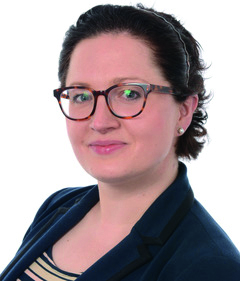
In the first of a series of regular columns, Rachael Forsythe (Edinburgh, UK) provides an update from the Circulation Foundation—the UK’s only national charity dedicated to vascular disease.
There’s something very imposing about the UK Houses of Parliament on a crisp winter morning. The security hustle, wood panelled walls and the dissonant division bell calling parliamentarians to vote, all set against the relentless rhythm of central London business, the powerhouse of the country. As the new chair of the Circulation Foundation, I’ve had the opportunity to walk these corridors several times lately, sensing opportunity and gravitas in equal measures.
For those of us treating peripheral arterial disease (PAD), the reality is familiar: chronic limb-threatening ischaemia (CLTI) is associated with a worse prognosis than most common cancers. Amongst parliamentarians, there is always a suppressed disbelief that 50% of patients with CLTI are dead at five years. Seems too bad to be true, surely? The bleak reality is that 70% of people have never even heard of PAD. That includes our policymakers, as well as the at-risk patient population themselves. We cannot act on what we cannot see, and visibility remains a key barrier to PAD care.
When it comes to policymaking, it seems like PAD is the ‘any other business’ of cardiovascular disease here in the UK. The UK National Health Service (NHS) 10-year plan specifically brings ‘cardio-’ problems to the forefront, leaving ‘vascular’ to the footnotes. Across the Atlantic, the US PAD National Action Plan launched in 2018 as a clinician-driven strategic framework for advocacy, education, awareness and research, recognising that joint action was necessary to improve PAD outcomes. In the UK, momentum is growing now too. Charities, professional societies, medtech companies and others are aligning around the same unifying goal of improving PAD outcomes through awareness campaigns and national pathway changes.
To this end, the Circulation Foundation is engaging with parliamentarians directly, attending roundtable discussions and stakeholder meetings along with other charities and societies, working alongside industry partners and the Association of British Healthcare Industry. Along with our allies in the Vascular and Venous All Party Parliamentary Group, we now have an ecosystem with the real potential to shine the spotlight on PAD, through pooling of resources, expertise and influence. In fact, the release of a white paper, ‘Making the Case for Reform in the Vascular Sector’, is an example of the strength of this unified voice, calling for meaningful change on a national level.
But these conversations are not abstract for those of us also in the operating theatre. They give clinicians a platform to translate the realities of the challenges that we face in clinical practice into policy conversations that can lead to change on the ground. They set the stage for earlier diagnosis, improved referral pathways and better access to care. However, whilst commissioning and national frameworks are needed to change the PAD narrative, it is also through well-resourced local clinical action that our patient outcomes will improve. The Circulation Foundation aims to support this work whilst remaining grounded in the challenges faced by clinical teams across the country. If PAD is to move further up the national agenda, then we need an ongoing coordinated voice from all corners, whether in the operating theatre or in Westminster.
Rachael Forsythe is a consultant vascular surgeon in Edinburgh, UK, and chair of the Circulation Foundation.