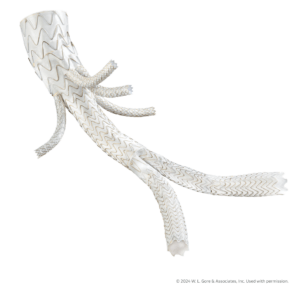
Gore today shared that its Gore Excluder thoracoabdominal branch endoprosthesis (TAMBE), which the company describes as the first complete, off-the-shelf endovascular solution for complex aneurysmal disease involving the visceral aorta, is gaining experience in hospitals across Europe.
A press release notes that, since its CE-mark approval earlier this year, TAMBE has been increasingly adopted in routine practice by numerous European vascular centres. Dedicated training programmes have been developed to help familiarise endovascular teams with the device’s capabilities.
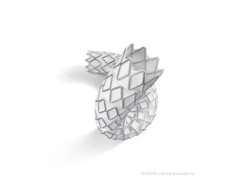
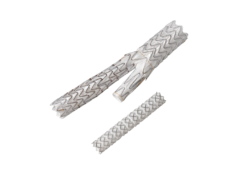
“Purpose-built to address complexity in the repair of thoracoabdominal and pararenal aortic aneurysms, TAMBE offers physicians a dedicated, modular system designed to maximise treatment flexibility while minimising aortic coverage,” the press release reads. The TAMBE system integrates components from other Gore devices, including the Gore Excluder iliac branch endoprosthesis, Gore Viabahn VBX balloon-expandable endoprosthesis, and Gore Excluder abdominal aortic aneurysm (AAA) endoprosthesis, building on a legacy of over 25 years of clinical experience and a track record of 450,000 patients treated worldwide.
Key device attributes include:
- Four integrated, precannulated internal portals for the placement of bridging stent grafts into visceral arteries
- An aortic component that can be reconstrained, providing flexibility for precise positioning
Gore highlights that safety and effectiveness of the device were demonstrated in the TAMBE pivotal study at 30 days and through 12 months, including 100% freedom from lesion-related mortality, conversion and migration, 99% freedom from disabling stroke, 98% freedom from paraplegia, and 94% freedom from target vessel instability.
“At Gore, we continue to pioneer endovascular solutions for physicians and their patients,” said Willy Davison, Gore’s global aortic business leader. “CE marking of TAMBE is a milestone that will expand our treatment portfolio and provide an innovative option for complex thoracoabdominal aortic disease across the EMEA region.”