 Evident Vascular has announced US Food and Drug Administration (FDA) 510(k) clearance of the Evident Vascular guidance system and Evident peripheral imaging catheters.
A press release notes that the Evident Vascular guidance system is intended for ultrasound examination of intravascular pathology during peripheral vascular interventions. The Evident platform, meanwhile, is designed to transform the intravascular ultrasound (IVUS) imaging experience by bringing together high-fidelity imaging, purpose-built artificial intelligence (AI), and workflow without disruption. The release adds that Evident’s proprietary flushless, plug-and-play catheters, intuitive user interface, and hands-free voice control are designed to support procedural efficiency.
“FDA clearance marks an important milestone for Evident and the physicians who believed in this platform from our company’s inception,” said Howard Rosen, CEO and co-founder of Evident Vascular. “We engineered the entire imaging architecture to deliver the image fidelity physicians need in a system that is both intuitive and easy to use.”
Conventional high-definition imaging is commonly associated with image resolution and ultrasound centre frequency. According to Evident, however, centre frequency alone cannot describe IVUS image quality as it is “only one part of the imaging equation”.
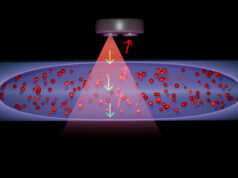
The company shares that its high-fidelity imaging takes a whole-system approach, integrating broad frequency bandwidth, advanced transducer design, and advanced signal processing. At the core of this architecture is Evident’s proprietary dynamic frequency control (DFC) technology, which provides dynamic frequency control to optimise imaging.
“The vessel-edge clarity and consistency across the field of view are remarkable. By optimising resolution and penetration across a range of vessel sizes and imaging depths, Evident’s technology provides detailed images for physicians to consider when measuring vessels, making decisions about therapy, and assessing procedural results,” said Eric Secemsky (Beth Israel Deaconess Medical Center, Boston, USA).