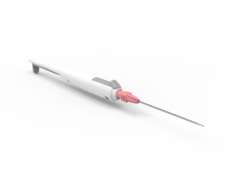

Access Vascular Inc (AVI) and Medline have announced a multi-year agreement to accelerate the rollout of AVI’s next-generation catheters, HydroMID and HydroPICC, which recently received an anti-thrombogenic indication from the US Food and Drug Administration (FDA).
Millions of peripherally inserted central catheter (PICC) and midline catheters are placed annually in acute care settings, the press release notes, supporting a market of over US$600 million. However, the category continues to be anchored in established polyurethane-based catheter technologies, with limited recent innovation.
The companies share that AVI’s HydroMID and HydroPICC catheters feature a proprietary hydrogel material with anti-thrombogenic properties to help address catheter-related complications such as thrombosis and occlusion—potential sources of morbidity, readmissions, and cost for health systems. Addressing these challenges positions AVI and Medline to meet a currently underserved need for providers.
Co-branded, co-developed products are expected to be available through Medline starting in late 2026, integrated into fully assembled, customisable procedure kits delivered to health systems nationwide.
By combining AVI’s proprietary biomaterial technology with Medline’s kitting and supply chain capabilities, the agreement helps deliver a “streamlined, procedure-ready solution designed to help improve efficiency, support consistency in care and strengthen supply resiliency”, the press release reads.
“Reducing infection risk and improving catheter performance in vascular access has been a priority in our practice for years. Innovations that address those challenges—particularly without relying on chemical additives—are worth paying attention to,” said Matthew Ostroff (St Joseph’s Health, Paterson, USA).
He continued: “Solutions that can be scaled through broad distribution networks have the potential to set a new standard for performance and patient care, and that matters at the bedside every day. Collaborations like this have the potential to drive meaningful progress, giving clinicians the tools to reduce complications, improve efficiency, and consistently elevate the quality of care they deliver. That’s the kind of advancement our field needs.”