
Penumbra has announced results from a subset analysis of the STORM-PE randomised controlled trial (RCT), which, according to the company, is the first trial to demonstrate a significant correlation between real-world, daily step-based activity as captured on a consumer wearable device and patient performance in the clinical six-minute-walk test. The findings were presented at this week’s at Vascular InterVentional Advances (VIVA; 4–7 October, Las Vegas, USA).
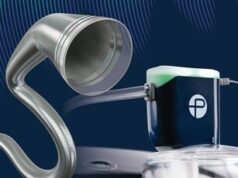
STORM-PE RCT assessed patients with acute intermediate-high risk pulmonary embolism (PE) who were treated with computer assisted vacuum thrombectomy (CAVT) plus anticoagulation compared to anticoagulation alone. Data from the trial showed patients treated with CAVT plus anticoagulation experienced improved right ventricular recovery and achieved greater functional improvement, including walking significantly further and a higher proportion of patients achieving New York Heart Association (NYHA) Class I (no physical limitations) i compared to anticoagulation alone.
A cohort of the trial patients were discharged with a fitness watch to track a patient’s activity, including actigraphy measures during everyday living. STORM-PE investigators performed a correlation analysis between watch actigraphy (daily total step count, walking bout data, and daily peak steps) and made comparisons to the six-minute-walk test performed at 30- and 90-day follow-up visits.
“STORM-PE is the first RCT in PE therapy to incorporate data from a consumer wearable device, representing an important step forward in understanding how office assessed clinical improvements translate into meaningful real-world recovery,” said Robert Lookstein, global co principal investigator of the STORM PE RCT and professor of radiology and surgery at the Icahn School of Medicine at Mount Sinai in New York, USA. “This innovation enables the scientific community to determine whether improvements observed during office assessments are reflected in patients’ real-world experiences at home.”
Key findings from the study analysed total daily step count, walking bout length, number of walking bouts, walking bout duration and peak 10-minute step count, which each were significantly correlated with 30-day six-minute walk test performance. Correlations were strongest with temporally matched wearable and clinic data at 30 days and attenuated with 90-day follow up data.
“This STORM-PE subset gives us a more complete picture of patient recovery by allowing us to compare data collected in the clinic with information gathered as patients go about their daily lives,” said Rachel Rosovsky, global co-principal investigator of the STORM PE RCT, haematologist at Massachusetts General Hospital in Boston, USA and associate professor of medicine at Harvard Medical School.
“By generating a more comprehensive view of patient outcomes, these findings have the potential not only to advance our understanding of the role of endovascular therapy in PE, but also to help shape the design of future clinical trials.”
Alongside the STORM-PE findings, investigators presented a new interim analysis of 1,000 prospective patients from the STRIKE-PE trial, looking at one-year functional outcomes and quality of life for PE patients after CAVT during this year’s Venous Endovascular Interventional Strategies (The VEINS) annual meeting (3–4 October, Las Vegas, USA). According to the company, STRIKE-PE continues to support the safety and effectiveness of CAVT, including short device times and low adverse events, for treating PE.
The study also found longer-term functional outcomes and quality-of-life benefits, including sustained reduced dyspnoea, increased walking distance, restored functional status and improved quality of life. STRIKE-PE is a prospective, international, multicentre study evaluating real-world safety, performance and long-term functional and quality-of-life outcomes of CAVT in up to 1,500 patients.
“At Penumbra, we are committed to advancing innovations that are supported by rigorous clinical evidence,” said James F. Benenati, chief medical officer at Penumbra. “By incorporating consumer wearables into STORM-PE, we have a unique opportunity to evaluate whether the clinical improvements observed in traditional assessments are reflected in patients’ day-to-day recovery at home. Together with emerging data from STRIKE-PE, these findings contribute to a growing body of evidence supporting a significant role for CAVT in the treatment of PE.”