This advertorial, sponsored by Gore, is only intended for readers in Europe.
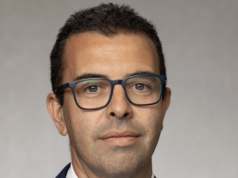
Against a backdrop of five-year data, Maxime Dubosq-Lebaz (European Hospital Georges Pompidou, Paris, France) and Gabriele Piffaretti (University of Insubria, Varese, Italy) consider the role of the Viabahn® device (Gore) in the treatment of complex superficial femoral artery (SFA) disease.
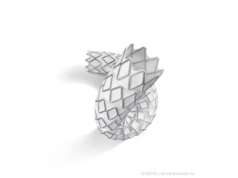
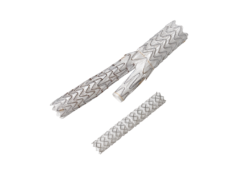
The Viabahn device is a flexible, self-expanding endograft designed for the treatment of de novo and restenotic lesions, as well as in-stent restenosis (ISR) of the SFA and proximal popliteal artery. Five-year data have been reported for the device, including 100% freedom from acute limb ischaemia (ALI) and 79.1% freedom from target lesion revascularisation (fTLR).1,2
For Dubosq-Lebaz, the Viabahn device has become a central part of his complex SFA practice over the past year. “I increasingly use the Viabahn device for long and complex calcified lesions,” he says, citing the recent addition of a heparin bioactive surface to the device—designed to provide lasting thromboresistance— and its low profile. This latter feature, he explains, enables use of the Viabahn device with a 0.018-inch guidewire, which offers “good conformability, pushability, and sustainability for crossing the lesion and delivery of the stent”.
Piffaretti, whose clinical experience with the Viabahn device spans three decades, concurs. The device “offers a lot of possibilities in our daily practice”, he says, highlighting its aptness for “the most complex lesions” in the SFA. When an endovascular solution is feasible and attempted for these cases, he says, “in our institution, the Viabahn device is our workhorse”.
Going into the specifics of complex SFA interventions, Dubosq-Lebaz stresses that the Viabahn device is well placed to meet some common challenges. “We know that after good vessel preparation, we might face recoil or dissection, we can face many complications,” he explains. “The Viabahn device offers several advantages over some other devices. We can use either a 6Fr or 7Fr sheath and both give us good security. Furthermore, the device is very stable when deployed. This is really important because you don’t want to create malapposition in patients with multi-stage lesions.”
Both Dubosq-Lebaz and Piffaretti highlight the particular utility of the Viabahn device at the intersection of open and endovascular surgery in the so-called hybrid repair, especially comprising femoropopliteal debulking and paving eventual residual disease with the Viabahn. The device offers the possibility of performing an “endo-bypass”, he says, the results of which are “pretty satisfactory” in his experience, with few patients requiring reintervention during the mid-to-long-term follow-up.
On this note, Piffaretti adds that a hybrid approach is well suited for elderly and frail patients—a cohort that is becoming increasingly prevalent in day-to-day practice.
“If the patient can go for some kind of surgical approach, but we want to avoid extensive surgery, the combination of proximal repair by open means alongside endovascular intervention using the Viabahn device is a viable and effective solution,” he says. “In addition, there is a subset of patients not so fit to receive, in some cases, six hours of conventional intervention, but not so fragile to be ruled out for any kind of treatment.”
Piffaretti also highlights the key role of the Viabahn device in especially long lesions. “When you have to treat a very long lesion, between 20 and 40cm in length, the Viabahn device is the only solution as far as endovascular solutions are concerned,” he shares.*
“The use of the Viabahn device in combination with a surgical approach at the groin is probably the best application of this device,” Piffaretti summarises. He notes that, in situations where the lesions are atherothrombotic, “independently of the age of the lesion, the chronicity of the lesion, or the extent of the lesion, we can go for the Viabahn device”.
“The main morphological consideration we must take into account in the application of the Viabahn device is heavy calcification along the entire femoropopliteal segment,” he caveats, underlining the need for careful vessel preparation before final treatment.
On the data front, Dubosq-Lebaz is keen to stress that, while positive, multicentre data from Japan exist, more are needed in order to strengthen the evidence base. While the Viabahn device is “making its place in the discussion between endovascular and open surgery,” he comments, another aspect of evidence gathering will comprise comparing the Viabahn device to alternative treatment options. “We have to improve data on this device specifically, but also not hesitate to compare it to others including drug-eluting devices and also to open surgery,” he says.
Piffaretti adds that data from different research groups need to be combined in order to create a clearer picture of the outcomes. “We need to combine data from different experiences, from different countries and continents, with what is happening in our own experience,” he remarks.
“It is not by default in our current practice that we choose surgery or the Viabahn device or a totally endovascular technique,” Piffaretti emphasises in closing. Instead, he says, treatment must be tailored to each individual patient.
“Peripheral arterial occlusive disease, especially in the SFA, is so complex, is so prevalent, that it is often difficult to decide on the best treatment option,” he continues. “This perfectly explains why, in the last two decades, as a vascular surgery community, we were not able to establish a definitive treatment algorithm in a single subset category of our patients, because it is so complex, clinically, morphologically, technically, and logically.”
More generally, Piffaretti considers the wider landscape of SFA treatment and the growing need for robust solutions against an increasingly complex disease background. “The clinical-morphological scenario is becoming more and more challenging and complex,” he says. “The only way to go is to build experience, knowledge, and clinical data.”
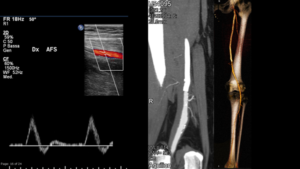
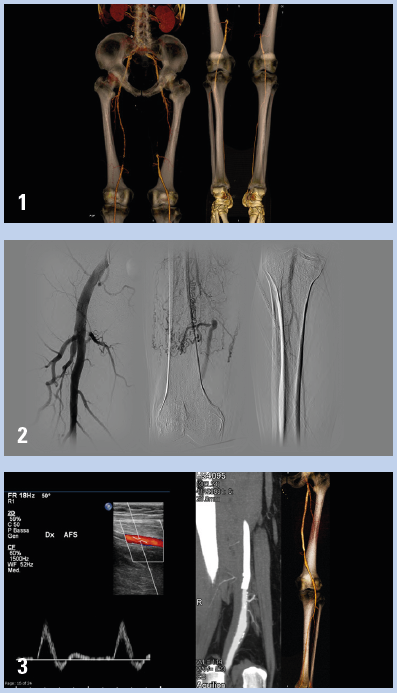
Case images
References
- Iida O, Ohki T, Soga Y, et al. Five-year outcomes of the Gore Viabahn endoprosthesis for the treatment of complex femoropopliteal lesions from a Japanese postmarket surveillance study. Vascular Medicine 2024;29(4):416–423.
- Ohki T, Kichikawa K, Yokoi H, et al. Long-term results of the Japanese multicenter Viabahn trial of heparin bonded endovascular stent grafts for long and complex lesions in the superficial femoral artery. Journal of Vascular Surgery 2021;74(6):1958-1967.e2.
*Gore Medical notes that Viabahn is the only device with a long configuration (25cm) to treat long lesion with minimum devices.