“The peripheral arterial programme at [the 2026 Charing Cross (CX) Symposium] will play host to 34 podium-first presentations, including expert and audience analysis, and discussion of landmark trials that have influenced practice and management guidelines,” said Andrew Holden (Auckland, New Zealand), co-chair and executive board member, ahead of this year’s meeting (21–23 April, London, UK). “The impact of these new data releases cannot be overstated.”
Following today’s full-day peripheral arterial consensus programme (Theatre 1) and tomorrow afternoon’s techniques and technologies session (Theatre 3), Thursday’s peripheral arterial and chronic limb-threatening ischaemia (CLTI) consensus session in Theatre 2 will feature key updates from the BASIL-2/3, BEST-CLI and SWEDEPAD trials, among numerous others.
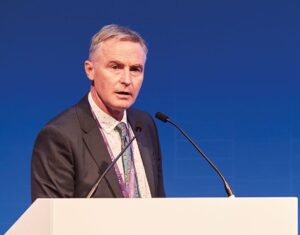
Ahead of his presentation analysing the diverging results of the BEST-CLI and BASIL-2/3 trials for CLTI patients, Martin Björck (Uppsala, Sweden) told Vascular News that understanding differences in methodology was a central component of their research team’s sub-analysis, as well as identifying the events that were the “main drivers” of the primary composite outcome: death or amputation, whether early or late.
Later in this session, Matthew Popplewell (Birmingham, UK) will provide additional analyses on BASIL-2 and BASIL-3. “For BASIL-2, we have spent some time with the data, trying to understand the reasons for the increased mortality seen with participants randomly assigned to surgery, as well as the impact of diabetes and drug-coated balloon angioplasty in patients with infrapopliteal disease,” said Popplewell.
“For BASIL-3, we really wanted to understand why drug-eluting stents were cost-effective but did not appear to be clinically effective in patients with CLTI secondary to femoropopliteal disease,” added Popplewell. “We also want to understand the relationship diabetes has with these treatments. There are many unanswered questions from the recent trials in the CLTI space, and we hope to address some of these at CX 2026,” he added. “This will include presentations on endovascular device data and treatment failure in both trials.”
“The BASIL journey is far from over,” continued Popplewell, adding that their research team has appointed a statistician and a PhD fellow to “support more work and impact assessment in the future”.
Shortly after, speakers will have the final say on the SWEDEPAD trial results, during a session which will feature first-time subgroup analyses from co-principal investigator Joakim Nordanstig (Gothenburg, Sweden). The analyses, taken from the SWEDEPAD-1 dataset, which compared paclitaxel-coated and uncoated devices for infrainguinal revascularisation in patients with CLTI, “reinforce the previously observed lack of clinical benefit of paclitaxel-coated devices as a universal revascularisation strategy,” Nordanstig told Vascular News.
“The findings further characterise this effect in key CLTI subgroups and highlight a potential signal of early harm in patients with tissue loss,” said Nordanstig. “We hope to inform the ongoing debate on the overall efficacy and safety of paclitaxel-coated devices in peripheral arterial disease and contribute to a more balanced assessment of their effectiveness in routine clinical practice.”
Programme highlight: Roger Greenhalgh Memorial Lecture
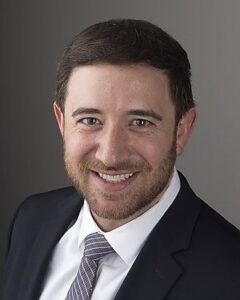
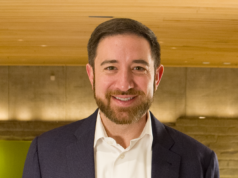
Twenty-first century peripheral arterial disease (PAD) care faces “remarkable” challenges, according to Eric Secemsky (Boston, USA), who will deliver this year’s Roger Greenhalgh Memorial Lecture, focusing on education, innovation and evidence in PAD.
The lecture (9:20–9:40 on Thursday) will highlight that, despite advances, key challenges remain. Secemsky emphasised to Vascular News that improving limb salvage depends on optimising multidisciplinary care and early screening of at-risk patients. “The vascular field remains fragmented, and better collaboration and treatment pathways are essential to make a true difference,” he said.
A major issue is the gap in PAD awareness. Secemsky stressed the need to educate both patients and non-vascular providers, adding that clinicians should recognise PAD risk factors and cite the danger of PAD-related amputations to encourage risk reduction.
In innovation, Secemsky pointed to high-quality trials as critical to advancing the field, and highlighted antiproliferative drug delivery, intravascular imaging and optimised medical therapy as key to improving revascularisation outcomes and prolonging limb function.
Secemsky hopes the lecture will encourage “a willingness to be all-inclusive with the vascular team to not only memorialise the teachings of the late, great Roger Greenhalgh, but inspire everyone to think outside the box and look at the future with optimism”.