This advertorial, sponsored by Abbott, is only available to readers in the USA.

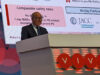
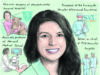
Citing positive randomised controlled trial (RCT) data out to three years and “excellent” results in her own practice, Elizabeth Genovese (University of Pennsylvania, Philadelphia, USA) charts a shift in her use of the Esprit™ BTK Drug-Eluting Resorbable Scaffold System (Abbott) from occasional to “go-to”. The vascular surgeon explains how she now utilises the technology as primary therapy in her chronic limb-threatening ischaemia (CLTI) practice, rather than just a bailout option.
“Below-the-knee (BTK) disease is incredibly challenging at baseline,” Genovese begins, specifying the medically complex and comorbid nature of the patient population that often precludes the possibility of treatment with bypass. Moreover, endovascular options have for a long time been limited and lacking in durability.
Against this backdrop, Genovese underscores a common theme of recurrent wounds and repeat interventions in patients with BTK disease. Referencing her own practice, she shares that, “I can get a patient to wound healing, but then in a year they show up again with a repeat wound, and now we’re battling this all over again”, emphasising a challenging and frustrating experience both for the patient and the treating physician. As a result, specialists have been searching for a longer-term solution for these patients, with Genovese highlighting that the BTK landscape “has really been a hotbed for research” in recent years.
Revisiting her extensive clinical experience with the Esprit BTK System, Genovese recalls an initial hesitance to use scaffolding in BTK vessels based on concerns around durability, fracture, restenosis, and maintaining future treatment options. “Very sparingly, mostly in bailout scenarios, I would use off-label coronary stenting below the knee and when I got the Esprit BTK System in my hands, I used it in a similar manner at first,” she says. “It was more of a last-ditch option for patients who I was bringing back for a second or third time.”
Things changed as Genovese’s experience with the Esprit BTK System and that of her colleagues grew. In parallel, strong clinical data and real-world experience emerged to support the technology’s adoption as primary therapy.
The LIFE‑BTK study, initially published in the New England Journal of Medicine and widely regarded as a groundbreaking milestone in BTK intervention, remains the first and only successful RCT to demonstrate superiority of an investigational device over percutaneous transluminal angioplasty (PTA) for the treatment of BTK disease in patients with CLTI.
Most importantly, the positive impact of the Esprit BTK System extended beyond one year. Three‑year follow‑up data from the LIFE-BTK RCT, presented at TCT in late 2025, show the Esprit BTK System demonstrated continued long-term benefits versus PTA, particularly in terms of limb salvage and primary patency.
“I started to see the data come out, the longer-term results, and hear how my peers were using [the Esprit BTK System], and I’ve very much switched my landscape to using it as a primary modality,” Genovese shares.

Genovese’s BTK practice now involves using the Esprit BTK System as a primary therapy. “I prepare the vessel with techniques such as intravascular lithotripsy, high-pressure angioplasty, scoring balloons or atherectomy and then I treat the entire lesion with the Esprit BTK System, not only to reduce the recoil but also to provide long-term scaffolding with drug delivery to allow for months of reduction of neointimal hyperplasia,” she explains.
Genovese is keen to stress that this shift in practice has occurred over time and involved unlearning some long-held teachings from her foundational training. “It took me a moment to change my algorithm,” she says. “But there is growing evidence of overwhelmingly positive data, along with my own experience where I am achieving excellent results for my patients with the Esprit BTK System.”
Another change in Genovese’s use of the Esprit BTK System in her CLTI practice is overcoming the “hurdle” of treating entire lesions with the device. She recalls: “Initially, I would prep and angioplasty a long lesion, and perhaps a small portion of that lesion would have a residual stenosis. Previously, I would just treat that one area of residual stenosis with the Esprit BTK System, and it was setting me up for geographic miss. So, while the initial completion angiogram looked pristine, at my six-month or one-year duplex follow-up, what I saw was recurrent stenosis or occlusion in the areas that I intervened upon but did not treat with the Esprit BTK System due to intimal hyperplasia, whereas my scaffold maintained its patency.”
Now, Genovese expresses confidence in using the Esprit BTK System to treat the whole lesion with multiple scaffolds when necessary, and not just to “spot treat” certain areas. In this regard, she comments, the Esprit BTK System has “moved the needle drastically”, offering the durability specialists have been searching for.
An “eye-opening” case
Exemplifying how her use of the Esprit BTK System as a primary therapy has impacted patients’ lives, Genovese shares a particularly “eye-opening” case.
The patient was a man in his early 90s in whom Genovese had initially treated a popliteal artery aneurysm endovascularly with a covered stent. Over time, he started to develop disease in his outflow vessels below the knee.
Genovese shares that, despite treating the patient with “everything that was at [her] disposal”, he ended up with an acutely ischaemic limb. After performing percutaneous thrombectomy and restoring flow through the popliteal stent, and to the limb, it was at this stage that Genovese decided to employ the Esprit BTK System as a primary therapy below the knee. “For the first time, I decided to treat his outflow disease with the Esprit BTK System as my final step,” she says. “I first used intravascular lithotripsy and laid multiple Esprit BTK scaffolds across the entire lesion, which resulted in optimal outcomes.”
As of May 2026, Genovese reports positive outcomes from this case 18 months down the road. “I saw this patient in clinic four weeks ago and everything remains widely patent,” Genovese shares. “This was a man in his 90s, who lives at home with his daughter, independently, and had he lost his limb, that would have been the end of his life. This has given him back years of his life that I didn’t think he was going to have.”
Genovese describes this case as a turning point in her use of the Esprit BTK System. “I went all in, and I saw really good results,” she notes, underlining similar experiences among her peers that are now backed by three-year randomised data. “The technology, when you use it appropriately, really does provide excellent, durable long-term results.”

Longer scaffolding in the works
As experience has grown, Genovese and others are increasingly applying the Esprit BTK System as primary therapy with full lesion coverage, using multiple scaffolds when necessary. This aligns real‑world practice with the evidence that demonstrates long‑term patency, limb preservation, and reduced reinterventions.
Looking ahead, Genovese sees use of the Esprit BTK System continuing to evolve and grow. Already available on both rapid exchange (RX) and over-the-wire (OTW) delivery systems, she also highlights that longer scaffolds will soon be available. “The most immediate next step is longer scaffolds to allow us to really, without hesitation and without inertia, fully treat the entire lesion that we’re prepping,” she says.
“With one or two scaffolds, we will be able to treat much longer lesions,” Genovese explains, pointing to an anticipated effect of being able to treat more distal tibial disease once these longer scaffolds become available. “It will be interesting to see how that evolves.”
For now, Genovese summarises that, “when used appropriately, the Esprit BTK System made a profound impact on the entire BTK landscape, providing a key treatment pathway in my treatment algorithm”.
New technology incremental reimbursement
As of 1 April 2026, the Centers for Medicare & Medicaid Services (CMS) granted Transitional Pass-Through (TPT) payment status to the Esprit BTK System. This three-year programme is designed to ensure Medicare beneficiaries can access innovative technologies without cost serving as a barrier to care. With this decision, the Esprit BTK System is now supported by both inpatient New Technology Add-on Payment (NTAP) and outpatient TPT, helping ensure that hospitals can adopt and use this technology in line with best clinical practice without added financial burden, supporting broader access to a therapy that has already demonstrated significant promise for patients living with CLTI.
CLICK HERE FOR IMPORTANT SAFETY INFORMATION.
MAT-2675981 v2.0