This advertorial, sponsored by Gore, is only available in selected countries and geographies. [geoip-content not_country=”US”]

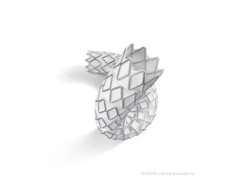
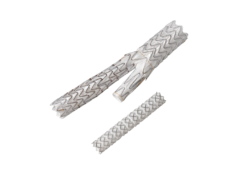
The Gore Viabahn VBX balloon-expandable endoprosthesis (VBX stent graft) has achieved an expanded indication as a bridging stent for fenestrated and branched endovascular aneurysm repair (F/BEVAR). Providing confirmation of the device’s durability and reliability, experts believe this latest development in the evolution of bridging stent technology will instil confidence in both physicians and patients.
The VBX stent graft has been designed to offer precise delivery and support positive outcomes in a variety of complex aortic applications. Real-world evidence from the Gore EXPAND and EMBRACE registries has confirmed the clinical performance and safety of the device as a bridging stent, with the official launch of the indication planned for this autumn.
Jacob Budtz-Lilly (Aarhus University, Aarhus, Denmark) and Martin Austermann (St Franziskus- Hospital Münster, Münster, Germany) were early users of the VBX stent graft. The pair recently spoke with Vascular News to share their extensive clinical experience with the device, as well as their reactions to the expanded indication.
Budtz-Lilly and Austermann first highlighted the necessity of having access to a bridging stent such as the VBX for challenging anatomy. “When you encounter a difficult vessel, that’s where you reach for a bridging stent that you know can get through it,” Budtz-Lilly shared, noting that he started using the device “very early on” for difficult cases.
In fact, he added that the VBX stent graft has enabled his team to perform cases that would not previously have been possible. “Before we had the VBX stent graft,” he recalled, “you might have had a vessel that you weren’t able to access, weren’t able to treat.”
Austermann detailed that he has been using the VBX stent graft for several years now too, with his institution’s experience recently published in the European Journal of Vascular and Endovascular Surgery. Over the course of almost a decade, Austermann shared that he has seen his use of the device evolve, selecting it to treat an increasing variety of anatomical scenarios, including the renal arteries.
Key features
Homing in on what makes the VBX stent graft a good bridging stent, Budtz-Lilly outlined three key features: its sheath compatibility, its flexible cannulation— particularly in steep-angled take-off vessels—and its simple placement. On this last point, he elaborated: “You can place the balloon-expandable stent where you want to place it. It’s a nice feature. I know other stents can be difficult to place where you want them to.”
Austermann agreed, describing the VBX stent graft’s compatibility as its “number one feature”. He explained: “I can always manoeuvre the VBX stent graft around steep angles due to its unique design and features.”
Austermann then described how the features of the VBX stent graft represent the ongoing evolution of bridging stent technology. “If you just go back five or six years, sheath compatibility was a huge issue,” he said. “You always had to upscale the introducer sheath. We didn’t have the steerables, so you had to have massive sheaths in the groin and enlarged sheaths through those large sheaths. Cannulations were difficult. We were really limited.”
In addition, Austermann highlighted the importance of a bridging stent being durable in order to avoid issues such as stent fractures, fatigue of the fabric, endoleaks, obstructions, and occlusions.
On fatigue resistance specifically, Austermann shared that he and his team conducted research to evaluate this aspect of the VBX stent graft in fenestrated endografting. He described that the team addressed what would happen to the stent inside the fenestration after flaring using a model involving bridging stents from several companies. The team simulated breathing movements over the equivalent of a 13-year period and, while observing “some material fatigue” over time, the stents held up well. In the VBX stent graft, specifically, Austermann reported that there was “not a single hole” at the end of the experiment, and no stent fractures.
“Our explanation is that, because of the VBX stent graft’s flexibility, the stress is absorbed outside the fenestration, so there is much less stress on the area flared inside the fenestration. All the movements created were absorbed by the rest of the stent,” Austermann told Vascular News. “If you have flexibility, if you have conformability like with the VBX stent graft, it is always an advantage.”
Austermann underlined another finding from the experiment, which was that the VBX stent graft fabric is “very, very durable”. When the VBX stent graft is flared it becomes transparent, which made Austermann and colleagues question whether it would be suitable for fenestration. To test this element of the device, he described that the team placed the fenestration in the middle of the stent and then flared the middle, putting a line with water on both sides. “Then we set it under pressure, under blood pressure let’s say, and it was completely dry on the outside. We could therefore prove that the thinness of the device is not a problem,” he reported.
An important step
For both Budtz-Lilly and Austermann, the news that the VBX stent graft now has an indication to be used on label as a bridging stent for F/BEVAR is validation of years of clinical experience and represents the start of a new chapter.
“It’s nice to see that we have real-world evidence confirming the VBX stent graft’s use,” Budtz-Lilly said. “I think these things are important. I think that’s one thing Gore has been pretty good about—their commitment to both innovation but also to going through this process of establishing real-world data to show that devices can be used.”
Austermann invoked the history of complex aortic repair to demonstrate the significance of the news in the ongoing development of bridging stent technology. “Endografts have been custom made for the last 20 years,” he stressed, going on to state that the Gore device ushers in a “new era of standard devices” for complex aortic repair.
Furthermore, Budtz-Lilly pointed out the impact the news will have on shared decision-making. “It’s important, particularly when speaking with our patients,” he remarked. “I think a lot of them know that treating complex aneurysms is relatively new, or at least that it’s an evolving and technically complicated process. To be able to say that we have a device that we’ve been using that has been confirmed, has evidence that it works, is a nice feature. It’s reassuring, both for us and for the patients.”
[/geoip-content]