This advertorial, sponsored by Gore, is only intended for readers in Europe.

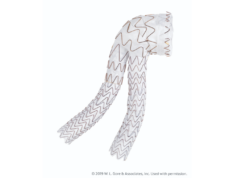
A recently released meta-analysis supports previous findings that covered balloon-expandable stent grafts offer clinical utility in maintaining long-term patency and freedom from target lesion revascularisation (TLR) in aortoiliac occlusive disease (AIOD). Following the publication of this observational paper, lead author Michele Piazza (University of Padua, Padua, Italy) speaks to Vascular News about the results, which particularly favour the Viabahn VBX balloon-expandable endoprosthesis (VBX stent graft; Gore).
The purpose of the Gore-sponsored study, published earlier this year in the Journal of Vascular and Interventional Radiology (JVIR), was to analyse the safety and effectiveness of covered balloon-expandable stent grafts for the treatment of AIOD using data published between 2000 and 2024.1
Piazza and colleagues conducted a PubMed systematic literature review search to expand a previous review of studies from the period 2000–2019. The present analysis additionally included papers shared in the subsequent five years.
Piazza tells Vascular News that the methodology of the paper is one of its key strengths. “We applied a really straight methodology to evaluate the outcomes of the literature with the PRISMA [Preferred reporting items for systematic reviews and meta-analyses] method,” he shares.
Of 252 records identified in the literature, 25 studies across 29 publications met eligibility criteria, resulting in 1,983 patients being included in the meta-analysis.
Piazza explains that it was the researchers’ intention to include only “high-quality papers” in their study. “We excluded case reports or short reports,” he says, noting that for a study to be incorporated into the analysis it had to include at least five patients with AIOD treated with covered balloon-expandable stents.
In the analysis, covered balloon-expandable stents show durable long-term outcomes for AIOD, with pooled stent graft patency rates of 91%, 85%, 81%, 79% and 80% at 12, 24, 36, 48 and 60 months, respectively. Rates of freedom from TLR were 94%, 91%, 87%, 84% and 85%, respectively.
By device, the researchers highlight that estimates of primary patency at 12 months trended higher for the VBX stent graft than for the Advanta V12/iCast stent graft (Getinge) and the BeGraft stent graft (Bentley).
Furthermore, a meta-regression analysis demonstrated that the VBX stent graft had higher primary patency and higher freedom from TLR than the Advanta V12/iCast stent graft across multiple timepoints.
“The findings of this updated systematic review and meta-analysis, although observational and not confirmatory, add to the body of evidence supporting the clinical utility of covered balloon-expandable stents in managing AIOD,” the authors write in their JVIR paper.
“One of the most studied stents in the literature”
Homing in on the details of the paper, Piazza underlines the particular durability of the VBX stent graft in AIOD. “The most important thing that I think comes up from this paper is the long-term durability in terms of patency,” he says. “So, even up to five years, we have excellent results. [The VBX stent graft] has excellent patency outcomes at three and five years. I think this is the main point.”
Piazza adds that the researchers looked at outcomes stratified by TASC classification, with the data demonstrating the VBX stent graft’s utility in challenging lesions. “What we have seen is that in TASC C and D, that’s the most important part where VBX stent graft were used, in more complex cases, they performed very well.”
More broadly, Piazza highlights the wealth of data now available for this device in AIOD. “The VBX stent graft for obstructive disease is one of the most studied stents in the literature,” he says, putting this down to two key factors: “one, it has innovative technology behind it, and two, the combination of conformability and radial force make it excellent in cases of calcifications.”
Limitations and future research
While expressing confidence in the results achieved, Piazza highlights certain limitations of the present study, as well as the need for continued research to ensure the best outcomes for patients.
“The main limitation is that, in the extensive literature review we performed, there are no randomised controlled trials,” Piazza notes, highlighting that the vast majority of studies involving both the VBX stent graft and other covered balloon-expandable stents are retrospective and observational in nature.
“That’s normal in this field when we look at technology in arterial obstructive disease, because there is a huge variability in anatomical characteristics of the patients and it’s difficult to do randomised trials,” he remarks, underlining one of the key challenges associated with collecting data in this space.
In JVIR, Piazza and colleagues explain that this limitation “introduced greater variability across studies, differences in patient characteristics, follow-up durations, and outcome definitions”. Despite this, the authors reiterate that the study “demonstrates that covered balloon-expandable stents are safe and effective when treating AIOD”.
Looking ahead, Piazza and colleagues note that their findings, “warrant further head-to-head comparative studies”.
The authors continue: “This meta-analysis highlights targeted areas of future studies to focus on optimising patient selection and understanding the long-term stent graft-specific performance, which is needed to further this area of research.”
Piazza adds that another aspect of future research might focus on the results of covered balloon-expandable results in different physiology. “In the future it would be interesting to see what the outcomes are based on anatomical position,” he says. Referring to the current paper, Piazza shares that the team “didn’t go through differences like stenting of the common iliac or the external iliac or, you know, greater calcifications as circumferential or partial”. As a result, he highlights the fact that there are “several additional anatomical aspects that may be evaluated in the future that probably will be the focus of our future works in this field.”
References
- Piazza M, Iqbal K, Imhoff RJ, et al. Systematic literature review and meta-analysis of covered balloon-expandable stents for aortoiliac occlusive disease. J Vasc Interv Radiol. 2026;37:107969. https://doi.org/10.1016/j.jvir.2025.107969