
Considering the impact of the latest data on a biosynthetic graft for haemodialysis, Bart Dolmatch (Palo Alto, USA) is optimistic but keen to see more evidence.
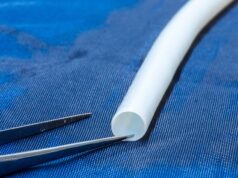
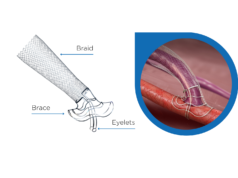
The aXess EU pivotal trial is a five-year, single-arm European study where a novel, absorbable biopolymeric graft, reinforced with nitinol wires, was used to create haemodialysis arteriovenous grafts (AVGs) in 120 end-stage renal disease (ESRD) patients. Augusto Ministro reported 12-month results at the 2026 Charing Cross (CX) Symposium and posited that Xeltis’ aXess AVG may constitute a new category of AV access for haemodialysis.
In the USA, UK, and Europe, most ESRD patients use an arteriovenous fistula (AVF) for haemodialysis rather than an AVG.1 In general, a well-functioning AVF is more durable than an AVG, requires fewer maintenance procedures, and has a lower rate of infection. A recently published meta-analysis of AVFs and AVGs included 63 studies comprising 357,333 patients (226,078 AVF; 131,255 AVG). At one year, AVFs were associated with higher primary, primary-assisted, and secondary patency rates, and lower overall complications and mortality compared to AVGs.2 Roetker et al studied 60,329 patients newly using an AVF and 17,763 patients using an AVG.3 AVG users, compared to AVF users, had a higher cumulative incidence of loss of primary- unassisted patency (87% vs. 69%), loss of primary-assisted patency (69% vs. 25%), and loss of secondary patency (22% vs. 10%) over three years. While there are now different types of AVGs, including the aXess graft, so far, no AVG has come close to the durability of a well-functioning AVF.
But not all newly created AVFs develop adequately for successful haemodialysis, and some patients may not even have suitable anatomy for creation of an AVF. In these situations, an AVG may be the next best solution. How do results with the aXess AVG compare to AVGs created with expanded polytetrafluoroethylene (ePTFE) conduit, the dominant graft material used for 50 years? The 12-month aXess AVG primary, primary- assisted, and cumulative patency rates of 34%, 49% and 79% in 120 implants are not much different from results of a meta-analysis of 3,381 ePTFE AVGs reporting 12-month primary, primary-assisted, and secondary patency rates of 41%, 46%, and 70%, respectively.4 Can an aXess AVG offer something better than ePTFE AVGs? Perhaps, if fewer maintenance procedures are needed to keep an aXess AVG functional and infections are less frequent, as reported by Ministro.
Is the aXess AVG the first entry into a new category of haemodialysis access? A predicate biopolymeric AVG, Humacyte’s acellular tissue-engineered vessel (ATEV) conduit was cleared by the US Food and Drug Administration (FDA) for AVG creation in 2024. And there are other biologic grafts that have been used to create haemodialysis AVGs.5 While novel in many ways, the aXess graft adds to the non-ePTFE graft options.
There is signal that the aXess graft offers some advantages. Unlike AVFs, aXess AVGs reliably develop for cannulation and can be cannulated as early as 14 days. Compared to ePTFE AVGs, the reported intervention and infection rates were substantially lower. When compared to the ATEV, the aXess graft does not require refrigeration for shipping and storage and may be stable for longer than 18 months.
While the early aXess EU clinical data represent a step forward in the quest to create a biosynthetic and stable AVG conduit, this story continues to evolve as we await more data from the ongoing aXess EU and US investigational device exemption (IDE) clinical trials.
References
- United States Renal Data System. 2025 USRDS Annual Data Report: Epidemiology of kidney disease in the United States. National Institutes of Health, National Institute of Diabetes and Digestive and Kidney Diseases, Bethesda, MD, 2025. Figure 4.6.
- Yang C et al. Comparative outcomes of arteriovenous fistulas and grafts in haemodialysis: meta-analysis with subgroup analysis by fistula type and transposition status. BJS Open. 2026; 10(2): zraf165.
- Roetker NS et al. Hemodialysis access type and access patency loss: an observational cohort study. Kidney Medicine. 2023; 5(1):100567.
- Halbert RJ et al. Patency of ePTFE arteriovenous graft placements in hemodialysis patients: systematic literature review and meta-analysis. Kidney360. 2020 Oct 15;1(12):1437– 1446.
- Berardinelli L. Grafts and graft materials as vascular substitutes for haemodialysis access construction. European Journal of Vascular and Endovascular Surgery. 2006; 32, 203–211.
Bart Dolmatch is an interventional radiologist at The Palo Alto Medical Foundation in Palo Alto, USA.
The author declared no relevant disclosures.