This advertorial, sponsored by Abbott, is only intended for readers in the USA.
Peter Faries (Mount Sinai Health System, New York, USA) recounts his extensive clinical experience in the field of carotid stenting, highlighting design developments, procedural advances, and pivotal data.
The decades-long duration of the carotid stenting story to date is, for Faries, a “very important element in the management, and the success of that management, of patients with carotid disease”.
Over time, the vascular surgeon explains, technologies have been scrutinised and optimised—resulting in devices and interventional techniques that are increasingly well suited to patients’ anatomy and disease severity. What’s more, as these elements have evolved, so too has patient selection.
In addition to the years of accumulated clinical experience for carotid stenting, the intervention is now backed by data from multiple trials and registries. Faries summarises that the results from these studies—citing the National Institutes of Health (NIH)-sponsored CREST-2 trial as a recent and particularly compelling case in point—show “successive improvement in outcomes and successive decrease in periprocedural complication rates, specifically stroke rates” with carotid stenting.
Design considerations
Homing in on carotid stent design developments, Faries highlights some “crucial” features of modern stents that have contributed significantly to the positive data that are now available.
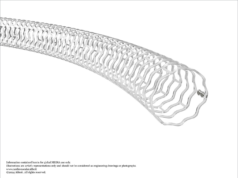
Firstly, Faries extols the benefits of a closed-cell stent design. Noting that carotid stents are available in both open- and closed-cell configurations, he specifies that a closed-cell design provides a better level of stability due to smaller gaps between the stent struts.
Faries goes on to note that this design can prevent embolisation. “A closed-cell stent is very effective in limiting pieces [of plaque] breaking off, dislodging during the procedure,” he says, citing “pretty good evidence that they’re more effective than open-cell stents”.
There are instances where an open-cell stent is preferable; Faries continues, noting that the benefits of a closed-cell design come at the expense of the flexibility that is a noted feature of an open-cell configuration.
“There are occasions when you’re trying to treat a blockage in a vessel that’s going through turns and tortuosity, and an open-cell stent may have advantages in those circumstances,” Faries explains. However, he stresses that the closed-cell configuration is the one being used by most experienced operators.
One such example of a closed-cell stent is Abbott’s Xact™ Carotid Stent System (CSS). Launched 20 years ago, Faries has considerable experience with this device, which has US Food and Drug Administration (FDA) approval for both transfemoral and transcarotid use. Backed by five clinical studies and registries with over 10,000 patients treated, Faries details that this self-expanding nitinol stent has demonstrated proven low stroke rates and consistent long-term vessel patency.
The Xact CSS, in Faries’ experience, is “extremely deliverable”, ensuring interventionalists can get to the target vessel “very effectively”. He also underscores the precision of deployment.
Furthermore, Faries highlights that the Xact CSS is available in both straight and tapered configurations. On the utility of the latter, he provides some detail: “Usually, you’re going from the common carotid artery to the internal carotid artery, and so there’s a change in calibre. It’s nice to have a tapered stent that accommodates that change, so it matches the native vessel diameter.”
Aside from carotid stent design, Faries notes that embolic protection filters have “really matured and evolved, and continue to evolve” in recent years. Good wall apposition is of particular importance with these devices, he states. “You want that good apposition so that all the blood is flowing through the filter, or else it doesn’t work.”
Faries explains that a filter’s nitinol struts are designed to give uniform expansion, after which a micro-porous membrane is responsible for trapping any plaque debris that has dislodged during the carotid stenting procedure.
“Having that even, uniform distribution has been an important component of the evolution of these filters and making them more effective in preventing embolisation, preventing periprocedural stroke,” Faries says.
He notes that, over time, filters have become shorter to ensure they fit into the carotid vessel, beyond the stenosis, and still leave room for the intervention itself. He describes this as an “important evolution” in the design of embolic protection systems.
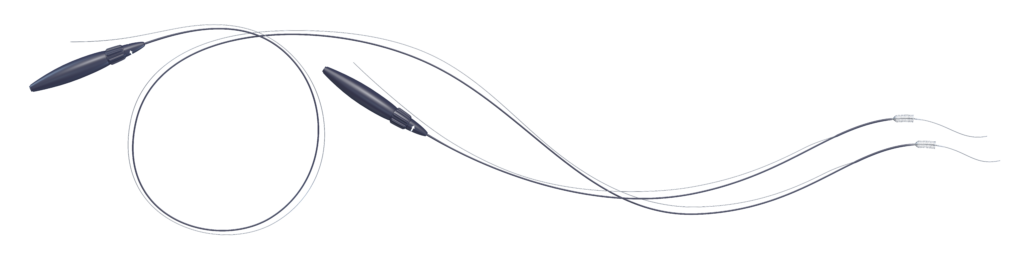
Referencing Abbott’s Emboshield NAV6 ™ Embolic Protection System specifically, Faries highlights a key feature of this device that has been another notable development in the field of carotid intervention. This system, he explains, can move independently of the wire.
Describing the importance of the feature, Faries explains: “If the wire’s attached to the filter, any manipulation of the wire can result in the filter itself moving. That can induce spasm that can potentially cause dissection or other issues if the filter is moving.” A wire that can move independently of the filter negates this risk.
“The NAV6 filter gets excellent expansion and excellent wall apposition,” Faries adds. He further notes the device is “highly effective in capturing any dislodged particulates” and reiterates its capacity for the wire to move independently of the filter itself, “so it’s safer, and it allows the potential for filter retrieval while maintaining wire access”.
“Getting a nice short filter with uniform expansion and effective particulate capture that can move, that the wire itself can move independently of are all advantages,” Faries summarises. “This improvement that we’ve seen, I think, it has contributed to the improvement of the procedure and the success of the procedure.”
Evolving access strategies and procedural approaches
On procedure, a “very important advance”, according to Faries, has been direct carotid access. “Instead of transfemoral carotid stenting, you can do transcarotid stenting where you actually perform a surgical access through a very limited incision at the base of the neck,” he describes.
The main benefit of transcarotid artery revascularisation (TCAR), Faries notes, relate to the proximity of the access to the intervention site. With femoral, radial, or upper extremity access, navigation of tortuous anatomy can sometimes pose challenges. “You’re really going to have to navigate a lot of vessel, and there can be considerable bending and turning of a device due to tortuosity in those vessels,” he says.
With TCAR, on the other hand, Faries stresses that “you avoid all that tortuosity and any disease that may be present in the aortic arch and in the access vessels”.
As carotid stenting continues to evolve, Faries summarises that Abbott’s commitment to the development of carotid stents and embolic protection systems have been “highly effective” in the field’s evolution thus far.
According to Faries, Abbott has developed the “leading stent” in this ever-moving field, also pointing to the company’s commitment to funding multiple rounds of clinical trials. “We want to be evidence-based in our therapies. We want to show scientifically that the treatments we’re proposing work,” he says. “It’s incredibly gratifying to see that this has now paid off with multiple trials that show efficacy and now an NIH-sponsored trial that again has demonstrated how effective this therapy can be.”
CLICK HERE FOR IMPORTANT SAFETY INFORMATION.
MAT-2677268 v1.0