NOTE: This video is ONLY available to watch in selected countries and geographies [geoip-content not_country=”US”]
The combined use of a drug-eluting device and a vascular scaffold “seems to be, in the longer run, the perfect solution for complex lesion treatment”. This is according to Koen Deloose (Dendermonde, Belgium), who shares some thoughts on newly released four-year TINTIN data in an interview with Vascular News.
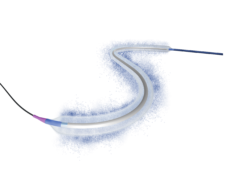
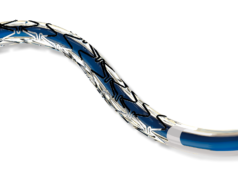
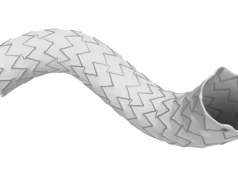
The prospective, investigator-initiated TINTIN study assessed iVascular’s Luminor drug-coated balloon and iVolution stent in 100 patients with TASC C and D lesions in the femoropopliteal segment. At this year’s Leipzig Interventional Course (LINC 2023; 6–9 June, Leipzig, Germany), Deloose shared outcome data though four years, noting that the study team had previously observed “fantastic” results at one- and two-year follow-up.
In terms of efficacy, Deloose reported a freedom from clinically driven target lesion revascularisation of 74.7%—a result he describes in this interview as “rather amazing” given that this was a severely diseased cohort of patients.
Considering what this and other keys findings mean for the vascular field, Deloose summarises: “We have confirmation that drug-eluting technology in general […] and the combination of drug-coated balloons and bare metal stents is working in the short term, but now with these data also in the longer term.”
This video has been sponsored by iVascular.
[/geoip-content]