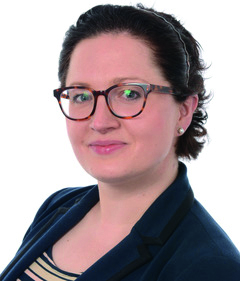
Rachael Forsythe (Edinburgh, UK) provides an update from the Circulation Foundation—the UK’s only national charity dedicated to vascular disease.
Sitting in the swealtering heat on a cross-London panic dash at six in the morning and it felt like I’d lost the plot a little. I’d certainly lost sight of my lane a long time before then.
During two days in May, at the start of the UK’s first heatwave of the year, the Circulation Foundation shot our short film, titled ‘Peripheral artery disease: not just a walk in the park’. Until the moment I saw the very first clips—three patients with peripheral arterial disease (PAD) talking candidly about the impact of the condition on their lives—I wondered whether I’d wasted countless hours of my own time, and other people’s money, on a great big, pointless passion project.
It was a hot and hectic few days of journeying across the city many times in many directions: meeting and greeting the film crew, organising taxis and lunches and coffees and making sure the patients got from their homes to the park and back, all in oppressive 35-degree heat. None of this looked anything like my day job. But there were also quiet conversations with the patients before the cameras rolled, getting to know them in a hurry and developing a rapport before filming began. It was an unusual privilege to be welcomed into their homes, to be taken around their family photos and mementos, to be shown the domestic side of their lives that I would normally not encounter.
More than once I thought to myself that I’d strayed so far outside my area of expertise that it had become almost comical. But, for all the unfamiliarity, the territory was familiar—patients whose lives and livelihoods had been ravaged by PAD, late diagnosis, symptoms mistaken for old age and the sad story of a patient whose leg could not be saved. These were familiar stories. This is the bread and butter of our specialty: facing the frustrations of years of under-recognition and under-resourcing for a disease that affects one in five people over the age of 60.
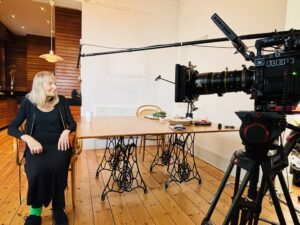 My preparatory meetings with the creative directors became as much part of the story as they were a practical part of making the film. They, two talented, well-educated film producers in their early 30s with extensive media experience, had (wait for it) never even heard of PAD. They were genuinely aghast at the sobering reality of the disease and its far-reaching consequences, and even more moved by the stories of the patients themselves on filming day. And perhaps their unfamiliarity with PAD was instructive; if two bright, curious professional communicators had never heard of this common disease, we had inadvertently demonstrated the problem we were trying to address. We spend our working lives surrounded by PAD but, to many others, it is invisible.
And then I watched them do something that I could not. Despite being completely subject matter-naïve at the start of the process, and with only a modest bit of guidance from me, they pieced together a beautifully shot five-minute film weaving the stories of three patients together in a moving narrative. They understood what would resonate with an audience unfamiliar with PAD and let the patients tell the story. We hope that it will bring something that clinicians and statistics often fail to do alone: to bring PAD awareness to the fore using the voices of people living with it.
We are hugely grateful to the patients who welcomed us into their homes and lives to share their stories, to the film and production crew for their brilliant talent and to our industry sponsors, whose support will allow us to screen the film in the House of Commons in September, immediately after a debate dedicated to vascular disease. It will give us a high-profile opportunity to take the patient voice to an audience with power to make a difference.
And I am quietly grateful for the opportunity to stray so far away from the operating theatre that I almost forgot the way back, but not quite.
Watch this space for the final cut.
Rachael Forsythe is a consultant vascular surgeon in Edinburgh, UK, and chair of the Circulation Foundation.