
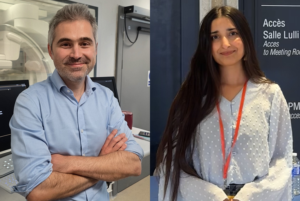
The European Society for Vascular Surgery (ESVS) European Venous Registry (EVeR) is set to elucidate clinical practice patterns for the management of deep venous disease, with the aim of improving long-term patient outcomes. Here, registry secretary Baris Ozdemir (Bristol NHS Foundation Trust, Bristol, UK) and ESVS clinical research manager Khadija Inam speak to Vascular News about what can be gleaned from early data, as well as highlight the importance of viewing quality of life as a key outcome measure.
Following the registry’s launch nearly two years ago, what are the headline achievements so far?
KI: As of mid-September, we have 50+ sites on board and the number of entries into the registry stands at 550+. We have ethics approval for sites across 20 countries throughout Europe, with Switzerland, Germany and Bulgaria the three latest additions over the last couple of months.
We have published a core outcome set, and a core descriptor set is under review. A further major area of work has been the development of objective performance goals (OPGs), using data from the EVeR registry, for deep venous interventions. This will provide consistent benchmarks for evaluating the outcomes of new devices and procedures, thereby strengthening the evidence base for evaluating emerging venous technologies.
Another key milestone this year is the publication of the first ESVS EVeR annual report in June on the ESVS website. This reflects the collaborative effort behind the registry, bringing together the contributions of participating centres across Europe and highlighting the progress the vascular community has made collectively.
A benchmarking report for industry partners has also been developed, providing structured insight on device performance within the EVeR dataset. Alongside this, a platform is being developed that will allow participating centres to compare their patient outcomes with the wider registry to support their own quality improvement.
Furthermore, now that the registry has passed the 500-patient mark, a platform is also being developed through which researchers will be able to submit proposals to use selective data from the registry for research projects. This is expected to launch in September on the ESVS website.
Are there any early findings from the registry that have surprised you?
BO: Both from registry entries but also from a site survey that Khadija coordinated, we are seeing huge variation in practice. Where procedures are performed—whether that be in a hybrid operating room, a cath lab, or an angiosuite—what kind of anaesthetic is used, and which adjunctive devices or treatments are used all vary widely.
One example of this variability relates to the use of intravascular ultrasound (IVUS). The consensus is that every patient who has a deep venous intervention should have IVUS, but its use varies considerably. There are some countries where it’s used extensively and other countries where it’s used minimally. Currently, we don’t know what the consequences of this variation in practice are for patient outcomes.
What we have also observed in the early data is that, when you look at overall patient outcomes, although some are improving both in the conservative and procedurally treated groups, there are many patients who do not have good outcomes three months down the line. I think what is particularly striking about this finding is that the data are from centres that are enthusiastic about sharing data and likely therefore enthusiastic about looking after these patients.
These are really early data, but over the coming years we will be able to use these insights to either confirm some of the rules that are current dogma or come up with new rules as to how to best manage these patients. Ultimately, we want to work out how best to select patients that should be managed conservatively versus those who should be managed with an intervention.
Why is this work important?
BO: Venous patients are typically younger and fitter with a long life expectancy. Therefore, the interventions and decision-making are about quality of life. Paradoxically, this often means that these patients are treated dismissively, because quality of life does not seem as dramatic as a limb-saving or life-saving intervention. In my opinion, however, these are the patients with the most to gain from good decision-making or properly executed procedures. The outcomes are not quite as dramatic, but for a 25-year-old, the rest of their life can be changed by the management of their venous disease. We need to pay more attention to quality of life, not just longevity.
What’s in store for EVeR in the next 12 months or so?
BO: Recruitment is going very well, but our focus over the next year is going to be around data completeness, both at baseline and at follow-up. The reality is that, without data completeness, the registry may not be as useful in improving care as we all hope. This is particularly relevant when it comes to the data that are harder to collect, the quality-of-life and disease severity data. Our entire focus is on trying to make sure that people record as much information as possible.
We of course must bear in mind that this is a pragmatic registry—we are not trying to collect as much data as a randomised controlled trial—but we would like to be collecting as complete a dataset as possible. We are going to see how best to support centres to do that, how to learn from centres that do this well, and explore electronic tools to make improvements.
KI: The follow-up data capture, which is really crucial to the success of the registry, is certainly going to be a key focus. Our aim is not to recruit patients into the protocol and forget about them. It is really important that participating sites provide timely and complete follow-up, as this is essential to evaluating patient outcomes in due course.
BO: I think finally we want to encourage research from the registry data that we gather. When people read the annual report and other papers coming out of the registry, we want them to ask what they could do with the data and how they could use it to further the evidence base in the field.
I want to stress that this is not a punitive registry. All the comparative data are for centres to use for their own interval governance and quality improvement. This is a research registry where the main aim is to use variation in practice to generate evidence that will inform how best to look after these patients in the long term and advance the field more generally.