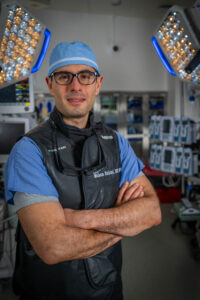
A team of researchers are combining expertise in vascular surgery and engineering to develop a novel device for endograft explantation. Leading the project is Maham Rahimi, a vascular surgeon at Houston Methodist Hospital (Houston, USA), who speaks to Vascular News about the clinical challenge at hand, what separates the device from current options, and the importance of cross-disciplinary collaboration for effective innovation.
Rahimi begins by highlighting a clinical challenge he routinely encounters in practice as the “driving force” behind the development of the device.
“EVAR [endovascular aneurysm repair] has transformed the treatment of abdominal aortic aneurysm,” he says. “It has benefitted millions of people worldwide since the early 1990s.” However, Rahimi stresses, improved patient longevity has brought with it a new set of issues.
“Endografts don’t grow or adapt as patients age,” Rahimi explains. “Over time, some patients require complete graft removal, and that’s where the challenge begins.”
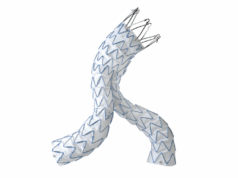
Rahimi describes endograft explantation as “one of the most technically demanding operations in vascular surgery”. Surgeons often rely on instruments that were never designed for this purpose, making procedures more challenging and increasing the risk of injury to the native aorta.
One commonly described technique for endograft explantation involves modifying a large syringe by cutting it to facilitate graft removal. Because this and other instruments were not specifically designed for explantation, they may have sharp or traumatic edges that can injure the native aortic wall or adjacent vessels. Issues arising from such damage can be “catastrophic”, Rahimi says, pointing to aortic dissection, renal injury, and significant bleeding as noted complications.
The device Rahimi hopes might address some of these issues—dubbed EndoEx—is a novel technology designed to support safer, more controlled removal of failed endografts during complex EVAR explant procedures.
The EndoEx is designed to provide surgeons with a “more controlled, atraumatic way to remove an endograft during EVAR,” Rahimi explains. The concept is based on safely engaging the graft while protecting the native aortic wall during explantation.
“Rather than relying on conventional instruments that were never intended for this purpose, EndoEx was designed specifically for challenging endograft explantation,” he notes. The device uses specific geometry and features designed to limit the mechanical damage associated with vessel trauma and improve ease of use.
Early testing
To date, EndoEx has progressed through benchtop, ex vivo animal tissue and cadaveric testing, with findings recently presented at the Society for Clinical Vascular Surgery (SCVS) annual meeting (28 March–1 April, San Diego, USA) and published in the Journal of Vascular Surgery (JVS).
In a short communication published in JVS in December 2025, Rahimi and colleagues conclude that EndoEx “significantly reduces mechanical damage” in experimental, ex vivo animal tissue, and preliminary human cadaveric models.
“This reduction in damage may confer a reduction in aortic wall injury during graft explantation, potentially leading to a safer and more effective solution that may substantially decrease morbidity and mortality in complex explant procedures of endovascular abdominal aortic aneurysm repair devices,” the authors write.
Central to the development of EndoEx is a partnership with a team of physician-engineering students from Texas A&M University’s Engineering Medicine (EnMed) programme (Houston, USA).
Rahimi, who is director of student research at EnMed, presented the clinical problem of endograft explantation to the students as a design challenge. They developed multiple concepts, which were systematically evaluated and refined through iterative prototyping and testing.
Once the team had an optimised prototype, this is when benchtop testing followed by cadaveric validation to evaluate the device’s performance in realistic anatomy began.
“It was a true translational process unfolding in front of my eyes,” Rahimi recalls, “from a clinical observation to engineering design, to prototype development, and finally to pre-clinical testing.”
Rahimi states that the students at EnMed—who all have engineering degrees and are now studying medicine—bring a unique perspective to vascular surgery innovation.
“They have an engineering mindset that they draw on to solve problems,” he says. “It’s a perfect combination for us, the hub that we have here in Houston. I understand the clinical problem and the unmet clinical need, while the students bring strong engineering skills and a fresh understanding of emerging technologies. Although I also have a PhD in biomedical engineering, innovation benefits enormously from bringing together people with different perspectives and expertise. That combination of clinical insight, engineering, and young minds is what helps translate an unmet need into a meaningful design.”
Next steps
While EndoEx remains in preclinical development, Rahimi stresses that the technology is “continually evolving”. On next steps, he shares that the team plans to refine the device, expand preclinical testing, and work closely with regulatory and industry partners to move the technology toward clinical testing. “Ultimately,” he says, “our goal is to make this available to vascular surgeons so we can improve the safety and reproducibility of endograft explantation.”
Looking further ahead, Rahimi believes that advances in device design may eventually make less invasive or even endovascular approaches to graft explantation possible, potentially reducing the morbidity associated with open explantation.
And ultimately, he is hopeful the field might even develop beyond device use. “I believe that there will be a day that we can diagnose vascular graft infection early enough that perhaps explantation is not required,” he posits, pointing to future developments in early detection of infection.
But central to the whole project, Rahimi reiterates, is the cross-disciplinary approach to innovation. “It’s an example of a different way of innovating,” he states. “We have started with a real problem in the operating room, brought physicians and engineers together in Houston and followed a structured process of design: prototyping, testing, and refining. I believe that’s how the next generation of surgical innovation should happen.”
“The challenges and complications we encounter in the operating room aren’t just unfortunate events. They are opportunities to learn, improve, and innovate,” Rahimi says in his closing remarks. “I hope this encourages surgeons to look at every clinical challenge as an opportunity to innovate. Some of the best ideas don’t come from the laboratory, they come from the operating room. When we combine clinical insight with engineering expertise, we can develop practical solutions that make surgery safer and improve patients’ lives.”