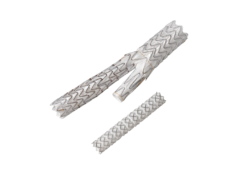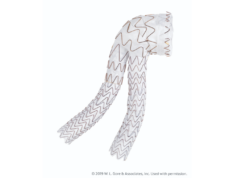
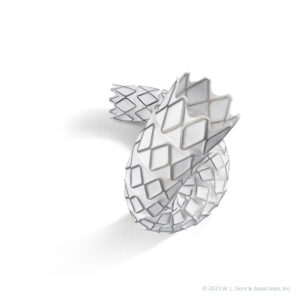
Gore today announced US Food and Drug Administration (FDA) approval of an expanded indication for the company’s Viabahn VBX balloon-expandable endoprosthesis (VBX stent graft) for use in fenestrated and branched endovascular aneurysm repair (FEVAR and BEVAR).
“This FDA approval is an important milestone for physicians treating patients with complex aortic aneurysms,” said Jason Belzer, Gore Americas business leader. “We are proud to bring US physicians an indicated bridging stent option for both FEVAR and BEVAR and to continue innovating to advance treatment options for patients with complex aortic disease.”
The approval comes on the heels of newly released three-year outcomes from the EMBRACE registry, unveiled at this year’s European Society for Vascular Surgery (ESVS) annual meeting (6–9 October, Belgrade, Serbia). The core lab-analysed and multicentre-designed registry evaluated real-world use of the device as a bridging stent in FEVAR and BEVAR among patients with complex aortic aneurysms.
“FEVAR and BEVAR have transformed the treatment of complex aortic aneurysms, allowing more patients to be treated with minimally invasive techniques. As these procedures have evolved, the need for a standardised, evidence-based approach to bridging stent use has become increasingly important,” said Gustavo Oderich (Baylor College of Medicine, Houston, USA). “Having an FDA-approved bridging stent option specifically indicated for these procedures and backed by longer-term clinical evidence is an important advancement for physicians treating these challenging cases and, ultimately, for the patients who may benefit from these procedures.”
Three-year outcomes demonstrate safety and effectiveness in FEVAR and BEVAR
A Gore press release details that the FEVAR analysis included 103 patients and 208 target vessels treated with the VBX stent graft. Three-year outcomes included:
- 97.5% vessel-level primary patency
- 93.9% vessel-level freedom from target-vessel instability (TVI)
The BEVAR analysis included 165 patients and 454 target vessels treated with the VBX stent graft. Three-year outcomes included:
- 94.0% vessel-level primary patency
- 88.4% vessel-level freedom from TVI
The three-year findings build on previously presented one-year EMBRACE registry outcomes and provide longer-term, core lab-adjudicated evidence of VBX stent graft performance in both FEVAR and BEVAR.