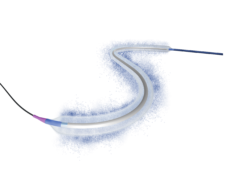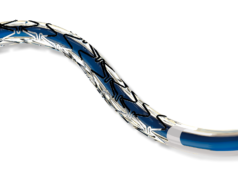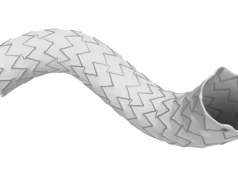
 iVascular has shared that Mariano Palena (Policlinico Abano Terme, Abano Terme, Italy) presented the results of an observational and prospective registry on the use of the iVolution Pro self-expandable stent in the flexion zone at this year’s Leipzig Interventional Course (LINC 2025; 28–30 January, Leipzig, Germany). The primary goal was to assess the effectiveness of the stent in scaffolding this anatomically challenging area.
The registry included 171 patients treated with 182 stents (116 in popliteal, 52 in superficial femoral, eight in common femoral and six in external iliac), with Palena and Pablo Lamelas (ICBA Instituto Cardiovascular, Buenos Aires, Argentina) as principal investigators. Notably, over 50% of patients had chronic limb-threatening ischaemia (CLTI), with most of the lesions classified as Rutherford categories three to five. The average lesion length was 118.7mm, and the mean stent length was 131.9mm. Furthermore, 64% of patients had complex TASC C and D lesions with moderate to severe calcification.
iVascular reveals that global outcomes demonstrated promising efficacy after a two-year follow-up, with a primary patency rate of 87.4% and 80.7% freedom from target lesion revascularisation (fTLR).
The company adds that the registry highlighted particularly encouraging results in the popliteal zone, a notoriously difficult area to treat due to dynamic forces and flexion. Of the 182 stents placed, 116 were deployed in this region. Primary patency reached 87.9%, and fTLR was 81.7% after two years.
Palena emphasises the significance of these results, stating: “The results of the trial allow us to proclaim that we can, and we have the capacity to, treat the popliteal artery, with the last-generation self-expandable nitinol stent that is iVolution Pro as a great option for it.”
iVascular states that these data confirm the ability of the iVolution Pro to deliver promising outcomes in long and moderate-to-severe calcified lesions, even within the challenging flexion zone.