The US Food and Drug Administration (FDA) has granted Breakthrough Device designation for the Fenestrated Treo abdominal stent-graft system, Terumo Aortic announced today.
The FDA’s Breakthrough Device designation programme is intended to fast-track the regulatory review process for certain medical technologies and device-led combination products that satisfy certain criteria; specifically, these include providing a more effective treatment or diagnosis of life-threatening or irreversibly debilitating diseases or conditions. The programme aims to provide patients and healthcare professionals with timely access to important breakthrough medical devices by accelerating their development, assessment and review.
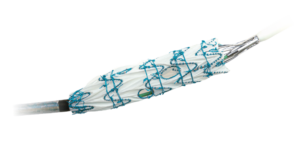
Fenestrated Treo is a custom-made endovascular stent-graft system developed to treat complex abdominal aortic aneurysms (AAA). The device is intended for the endovascular repair of juxtarenal and suprarenal (pararenal/paravisceral) abdominal aortic and aortoiliac aneurysms, supporting treatment in cases where standard off-the-shelf devices may not provide an adequate anatomical fit.
Jim Rushworth, president of Terumo Aortic commented: “The FDA’s Breakthrough Device designation for Fenestrated Treo is very encouraging, and we look forward to close collaboration with the FDA as we work to advance treatment options for patients with complex abdominal aortic aneurysms.”
Jeffrey Mifek, global vice president of clinical and medical affairs added: “This designation supports the potential for US physicians to treat patients whose complex anatomy or clinical conditions makes traditional endovascular devices or open surgery unsuitable—addressing a significant unmet need. Fenestrated Treo offers a tailored, minimally invasive solution designed for challenging anatomies, including the ability to incorporate multiple fenestrations precisely aligned to a patient’s unique arterial branching pattern. This level of customisation helps address the needs of patients with complex vessel configurations that off-the shelf devices can’t accommodate.”