Jupiter Endovascular today announced completion of patient enrolment in the SPIRARE II pivotal trial evaluating the Vertex pulmonary embolectomy system in patients with acute, intermediate-risk pulmonary embolism (PE). The final subject was enrolled by Vikas Aggarwal (Henry Ford Hospital, Detroit, USA), the site’s principal investigator.
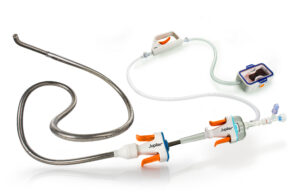
SPIRARE II is a prospective, single-arm, multicentre pivotal study that enrolled 123 patients across 23 sites in Europe and the USA. Trial endpoints characterise the procedural and clinical performance of PE treatment with the Vertex system across measures of safety, right heart function and clinical improvement from the time of the procedure to 30 days post-procedure. The Vertex system incorporates Jupiter’s Transforming Fixation (TFX) technology to provide on-demand stability and control during transcatheter interventions in the pulmonary vasculature.
“The high level of investigator engagement in SPIRARE II underscores a critical shift in how we approach pulmonary embolism, moving toward total procedural control and intentional access to drive superior clinical outcomes,” said Sameh Sayfo (Baylor Scott & White The Heart Hospital-Plano, Plano, USA), the trial’s global co-principal investigator. “This trial isn’t just measuring clot removal; it is redefining our understanding of the physiologic recovery made possible through TFX-enabled thrombectomy. We are deeply indebted to the patients whose participation is helping us set a new global standard for PE care.”
The Vertex system uses the TFX platform technology “to navigate flexibly through the right heart and transform into a stabilised state in the pulmonary arteries for precise intervention,” the company states in a press release. “The unique capability for a single TFX-enabled device to decouple the characteristics of flexible navigation from stable support is intended to address long-standing challenges in PE thrombectomy related to cardiac strain and reliable vessel access within the pulmonary vasculature.”
Last year, Jupiter announced positive results from the SPIRARE I first-in-human (FIH) study after data were presented at the 2025 Transcatheter Cardiovascular Therapeutics (TCT; 25–28 October, San Francisco, USA) conference. Trial results showed no major adverse events—including major bleeding—within 48 hours; 80% of procedures were completed without re-crossing the heart; 70% of procedures were completed without use of a stiff guidewire; 32% improvement in mean pulmonary artery pressure (mPAP), decreasing intraprocedurally from 30.8mmHg to 20.8mmHg; 29% improvement in mean right ventricle/left ventricle (RV/LV) ratio, decreasing from 1.4 to 1.0 at 48 hours post-procedure; and 71% improvement in mean modified Medical Research Council (mMRC) Dyspnea Scale at 48 hours (2.4 points) and 94% improvement at 30 days (3.2 points).