In the SirPAD trial, angioplasty with sirolimus-coated balloons led to a lower incidence of major adverse limb events (MALE) at one year than angioplasty with uncoated balloons among patients undergoing endovascular treatment for infrainguinal artery disease.
Co-principal investigator Stefano Barco (University Hospital Zurich, Zurich, Switzerland) shared primary results of the trial—noted to be the first randomised evaluation of sirolimus-coated balloons for preventing major limb events in peripheral arterial disease (PAD)—at the American College of Cardiology’s Annual Scientific Session (ACC.26; 28–30 March, New Orleans, USA). Findings were simultaneously published in the New England Journal of Medicine.
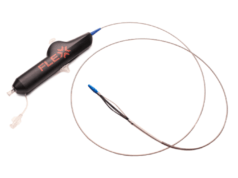
The academic, all-comers trial enrolled 1,252 patients with femoropopliteal or below-the-knee (BTK) PAD who were randomised to receive either the MagicTouch PTA sirolimus-coated balloon (Concept Medical) or any uncoated balloon angioplasty.
The primary outcome of MALE, encompassing major unplanned amputations affecting the target limb or target-lesion revascularisation for critical ischaemia, occurred in 8.8% of patients enrolled in the sirolimus-coated balloon group vs. 15% in the uncoated balloon group at one year, corresponding to a median unbiased estimate of the risk difference of -4.9%. This difference was both noninferior and superior in favour of MagicTouch PTA vs. uncoated balloon.
Furthermore, the authors showed a statistically significant reduction in the composite key secondary endpoint of any unplanned target-limb amputation or any target limb revascularisation.
“We are excited about the primary outcome results of SirPAD. It is one of the very few trials in this field that successfully included an all-comers population, meaning consecutive patients without eligibility restrictions related to target-lesion characteristics or PAD stage. This led to nearly 50% of enrolled patients having acute or chronic limb-threatening ischaemia, thereby providing enough events and statistical power to demonstrate superiority for hard clinical outcomes at one year,” said Barco and co-principal investigator Nils Kucher (University Hospital Zurich, Zurich, Switzerland) after the presentation.