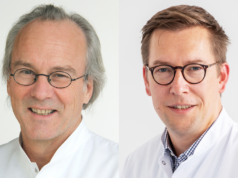
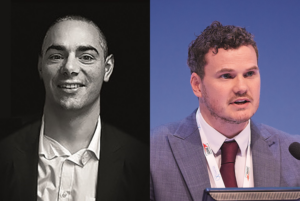
ROSSINI-Platform—said to be the largest-ever UK surgical trial—is set to commence in the coming months with the aim of assessing various methods for reducing post-intervention surgical site infection (SSI). The project will encompass six parallel randomised controlled trials (RCTs) across several surgical specialties, including vascular surgery. Two of the vascular surgeons involved speak here about the goals and scope of the trial, encouraging fellow specialists to take part.
“ROSSINI-Platform is a very ambitious trial,” says David Bosanquet (South East Wales Vascular Network, Cardiff, UK), who is part of a cross-specialty team of investigators led by Thomas Pinkney (University of Birmingham, Birmingham, UK). Indeed, the trial is set to recruit 26,000 patients from 100 sites across the UK. The trial is also noted to be the largest surgical trial ever funded in the UK, as per a press release from the University of Birmingham, which notes the centre has been awarded more than £10 million funding from the UK National Institute for Health and Care Research (NIHR) to conduct the research.
The trial design is based on that of ROSSINI 2, which assessed how to reduce rates of infection associated with midline laparotomy wounds in a multi-arm platform study. Bosanquet explains that researchers evaluated the effectiveness of three interventions delivered at the time of surgery, with every patient randomised to either receive or not receive all three interventions.
“The researchers were able to drop arms that were demonstrating no impact in reducing infection rates and able to keep arms that were suggestive of improving or reducing infection rates,” Bosanquet shares, elaborating on the trial’s unique design. “They were also able to add in new interventions as well.”
ROSSINI 2 showed that “you can essentially undertake multiple RCTs within one trial,” Bosanquet remarks. “You don’t have to set up each trial individually, you don’t have to go through ethics, and you don’t have to develop a whole new protocol.”
Bosanquet describes ROSSINI-Platform as “even more ambitious” than its predecessor. While ROSSINI 2 assessed one type of incision, the present trial will evaluate six, with two falling under the vascular surgery umbrella: groin incision for arterial revascularisation and major lower limb amputation.
“We are looking at patients in both of these groups, and we’re comparing outcomes for surgical site infection depending on what group patients are randomised to,” says Bosanquet. “Patients can be randomised to either receive or not receive three different types of intervention, with all interventions delivered at the time of surgery. It’s all about looking at what interventions do actually reduce infection rates.”
Alongside these groups, the trial will include patients undergoing obstetric, breast, neuro, and cardiac surgery, with interventions ranging from state-of-the-art wound cleaning solutions to applying antibiotics differently during surgery to reduce rates of SSI.
“It’s really exciting,” Bosanquet comments, referencing the ground that the trial aims to break.
“A major issue”
The clinical need for ROSSINI-Platform is clear, notes Bosanquet. Referencing the literature, he mentions the GIVE (Groin Infection after Vascular Exposure) and SIMBA (Surigcal site Infection in Major lower limB Amputation) studies, both of which have highlighted SSI as “a major issue”.
Considering the types of infection ROSSINI-Platform ultimately aims to curb, Bosanquet highlights a scale from the “annoying” to the “catastrophic”, with the latter being a particular focus.
Using the example of an infection at the site of a groin incision for arterial revascularisation, Bosanquet points to the risks: “[Infection] can impact the anastomosis that you’ve created underneath it, which could blow.” As for amputations, he highlights the scenario of an infection at the site of an amputation below the knee that has to be revised to an above-knee amputation making the difference between the patient ambulating or not ambulating with an artificial limb.
“There are important outcomes in terms of length of hospital stay, finances, how it impacts the NHS [UK National Health Service] and inconvenience to the patient in terms of antibiotics and further surgery,” says Bosanquet, “but there can also be not-infrequent catastrophic implications for surgical site infection, which is why this study is so important.”
Matthew Popplewell (University of Birmingham, Birmingham, UK), also a co-investigator, is in agreement about the clinical demand for ROSSINI-Platform, highlighting in particular the ubiquity of SSI. He highlights a recent study from Ian Chetter (Hull York Medical School, University of Hull, Hull, UK) and colleagues—the DRESSINGS trial—which looked at a special active dressing predominantly in patients with lower limb surgery. The trial included amputees, lower-limb bypasses, and groin wounds. “The infection rate in that study in both arms was 22%, so that’s almost one in four people getting some sort of wound infection,” he says. “This is a significant issue.”
While acknowledging that some cases of infection can be solved quite simply, Popplewell echoes Bosanquet by emphasising others cannot. “It’s the people who are coming back and having more interventions, losing their legs, having revisions, dying and having bacteraemia ITU [intensive care unit] admissions. Those are the ones that we want to stop,” he says.
“It’s worthwhile getting the basics right”
As for timelines, the team hopes to open the trial this spring. Bosanquet stresses the complexities of working up a project of this scale and the inevitable delays that come with the involvement of six different surgical specialties. With a trial of this magnitude, he says, “it’s worthwhile getting the basics right” to avoid “rushing things and ending up with problems further down the line”.
For the time being, the team is conducting audit work to look at current practice, with the plan being to repeat this exercise at regular intervals during the study to identify any changes in practice.
Looking ahead, Bosanquet hopes ROSSINI-Platform will exemplify the benefits of cross-specialty collaboration for best patient care. “The strength of this type of trial design lies in the fact that you can pull interventions or procedures that work in other surgical pillars, and investigate if they benefit your pillars’ patients,” he notes. “That’s really interesting.”
As for the vascular pillars specifically, Bosanquet and Popplewell share their hope that all vascular centres across the UK will get involved, with both keen to stress the suitability of the follow-up method for time-poor research teams.
“The follow-up method the trial will be adopting is cognisant of the fact specialists are busy,” Bosanquet explains, describing an all-digital platform—the Central Digital Wound Hub—that utilises photographs on a dedicated app.
He elaborates: “All of the follow-up is done digitally and that acts as a screening service and tool to be able to identify possible infection, which then triggers a clinical review.” The idea, he says, is to reduce the burden of research governance on a site level and move it into a national digital platform.
Popplewell adds: “Basically, once a patient leaves hospital, unless they trigger for infection, there won’t be any other work to do from the local site from a research perspective because it will all be done centrally.”
Popplewell notes that this is the first time this type of follow-up method has been used in a study of this size. While acknowledging that “there are going to be issues, no doubt,” he stresses that there will be a backup telephone screening tool for those patients who are not able to use digital technology.
Bosanquet hopes that this element of the study will encourage specialists to take part. “The study is designed so the central team deliver as much of the data collection as they can, rather than leave it to individual research teams,” he says, “that makes the trial more deliverable and attractive to clinicians and R&D [Research and Development] teams.”