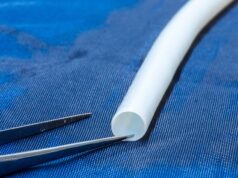
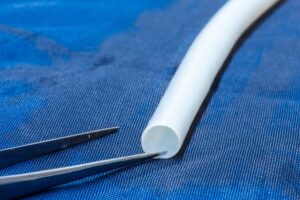
Humacyte recently announced the presentation of 36-month data assessing the durability of its Symvess acellular tissue-engineered vessel in extremity arterial trauma patients. The results were shared at the 2026 annual winter meeting for the Vascular and Endovascular Surgery Society (VESS; 5–8 February, Olympic Valley, USA).
The presentation, titled ‘Long-term outcomes of the acellular tissue-engineered vessel in extremity arterial trauma repair: results from the V005 trial,’ was delivered by Michael Curi (Rutgers New Jersey Medical School, Newark, USA). In the V005 trial, Symvess maintained long-term structural integrity, exhibited low infection rates, and supported high rates of limb salvage in patients who were followed for up to 36 months.
“These long-term results demonstrate the potential of Symvess to meet the needs of trauma patients when autologous vein is not available or feasible,” said Curi. “During the V005 study, there were sustained low rates of infection, no conduit-related deaths, and excellent Symvess durability out to three years—outcomes that translate into meaningful benefits for patients facing life- or limb-threatening injuries where autologous reconstruction is not an option.”
Among those treated in the V005 Phase 2/3 study were 54 patients who underwent extremity vascular repair with Symvess for whom treatment with autologous vein, the standard of care, was not feasible. Within this patient population, once early complications from the traumatic injuries resolved, the rates of conduit infection, limb salvage, and patient survival plateaued and remained relatively constant through the three years of follow-up. Symvess maintained an infection-free rate of 92.9% from months 3–36, with no infections after day 37 and only three conduit infections overall. Limb salvage rates were 87.3% at 12 months and 82.5% at 24 months, despite a severely injured trauma cohort.
Long-term mechanical durability was also demonstrated during the V005 study. Duplex ultrasound was used to evaluate patency and mid-vessel diameter at each follow-up visit through month 36. Average mid-graft vessel diameter did not materially depart from the baseline of 6mm over 36 months. In addition, there was no evidence of trends in either dilatation or narrowing for Symvess diameter out to 36 months. Adverse events and serious adverse events declined over time, supporting the long-term durability of this vascular repair. Importantly, no deaths, amputations, or mechanical failures were attributed to Symvess. Also, there was no evidence of spontaneous ruptures or structural failures in any patient throughout the follow-up period.
Vascular wounds are challenging for surgeons to treat, and autologous vein grafts have traditionally served as the standard of care due to their durability and low infection rates. However, autologous grafts are not always feasible in injury settings where veins are damaged or there is little time to harvest.
Humacyte notes that Symvess is designed to be immediately available off-the-shelf—saving critical surgical time in emergency situations—and has also consistently demonstrated low rates of infection.