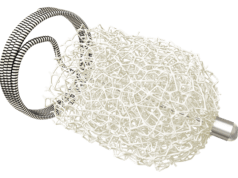

Life Seal Vascular has announced the first clinical implants of their investigational Cygnum aneurysm sac management device (ASMD), with two patients enrolled in the ASCEND first-in-human (FIH) study in New Zealand.
A press release notes that the Cygnum device lines the aneurysm sac prior to deployment of the endovascular aneurysm repair (EVAR) graft and is designed to prevent type II endoleaks and reduce the need for reintervention in the long term. The ASCEND FIH study is evaluating the safety and efficacy of the Cygnum ASMD as an adjunct to EVAR.
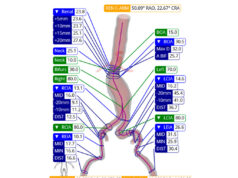
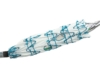
“Both our patients were at particularly high risk for type II endoleaks, and I am pleased to report that both procedures were successfully completed,” said Andrew Holden (Auckland City Hospital, Auckland, New Zealand), principal investigator for the ASCEND FIH study. “The Cygnum ASMD integrated seamlessly into the EVAR workflow and deployment was straightforward. The post-deployment imaging demonstrated excellent positioning and good apposition of the Cygnum device to the aortic wall. We are looking forward to reporting the longer-term outcomes in the future.”
Matt Thompson, co-CEO of Life Seal Vascular, added: “This milestone marks Life Seal Vascular’s transition into a true clinical-stage company. Our strategy is centered on generating rigorous clinical evidence to support this disruptive innovation, which we believe has the potential to obliterate type II endoleaks and related costly reinterventions. Cygnum represents a novel approach to active sac management, and we believe it can pave the way for a new standard of care for EVAR.”
Life Seal Vascular shares that it will continue enrolment in New Zealand and is preparing to expand the early clinical experience into other geographies as part of its broader global clinical development strategy.