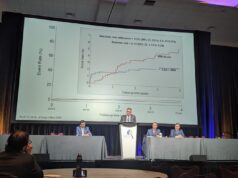

Restoring blood flow to the brain by treating carotid artery stenosis does not appear to improve patients’ cognitive skills, according to preliminary late-breaking science presented today at the 2026 International Stroke Conference (ISC; 4–6 February, New Orleans, USA).
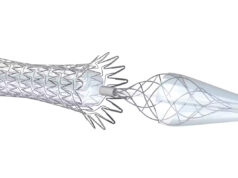
“Whether patients undergo a procedure to remove plaque in the carotid artery [known as] carotid endarterectomy, stenting to insert a flexible tube to hold open the narrowed part of the artery, or a combination of medications and lifestyle guidance without a procedure, there should be no expectation that cognition will improve after the treatment,” said study lead author Ronald Lazar (University of Alabama at Birmingham, Birmingham, USA).
Standard treatment of carotid artery stenosis typically involves intensive medical management, including aspirin to prevent blood clots, and medication for high blood pressure or cholesterol, as well as lifestyle changes like smoking cessation, weight loss if needed, increased physical activity, and a healthy diet. When the stenosis is blocking more than 70% of the artery, either carotid endarterectomy or stenting may also be recommended.
The CREST-2 randomised controlled trial (RCT)—from which the main findings were presented in late 2025—compared stroke rates among people randomly selected to receive either intensive medical management alone; intensive medical management combined with carotid endarterectomy; or intensive medical management plus stenting. Primary data showed that stenting led to a reduced stroke risk compared to medical management alone, but the same reduction was not seen with carotid endarterectomy versus medical management alone.
An American Stroke Association (ASA) press release details that “almost all” previous research has found a link between carotid stenosis and lower performance on tests of cognitive function. The present CREST-2 substudy included a ‘cognitive core’ component intended to assess cognitive performance before treatment and every 12 months for up to four years, making this the first large carotid stenosis study to incorporate cognition as a major outcome within the design of an RCT.
“Even among participants with the lowest cognitive function at the start of the study, […] there were still no differences in cognitive skills among the treatment groups.”
Ronald Lazar
In 2021, Lazar was part of a group that published results in Stroke showing that, before carotid stenosis treatment, 786 patients with severe (>70%) but symptomless carotid stenosis who entered the CREST-2 trial had lower cognitive skills scores—especially regarding memory—compared to participants in a separate population-based study matched for similar demographics and cardiovascular risk factors.
“The 2021 analysis indicated that revascularisation might improve cognitive function,” said Lazar, who is the principal investigator for this cognitive core substudy and also a co-investigator for the overall CREST-2 trial.
Despite those early indications, the researchers for the present substudy found that—across an average of 2.8 years of post-treatment follow-up—there was no difference in thinking or memory over time among participants who underwent stenting or surgery, as well as those who were treated solely via intensive medical therapy.
“Even among participants with the lowest cognitive function at the start of the study, who were expected to gain the most from these treatments, there were still no differences in cognitive skills among the treatment groups,” Lazar added.
The researchers further relay that cognitive decline was confirmed in the participants who had a stroke during the study, validating the cognitive tests’ ability to detect genuine changes in brain and neurological function.
According to Lazar, these results may change how clinicians counsel patients about the benefits of stenting or surgery in the treatment of carotid artery stenosis.
“Healthcare professionals can no longer assert that treatment of carotid stenosis will improve cognition. However, worsening cognition over time may be a signal that treatment may need to be re-evaluated and possibly adjusted,” he stated, going on to note that the substudy was not able to determine whether reduced blood flow to the brain is the sole or most important reason for cognitive decline in carotid artery disease patients. “Some characteristics of a blockage can cause small particles to travel to the brain. These particles may, over time, affect how the brain functions. This is an area we plan to explore in our future research.”

Additional limitations of the study include the fact that all cognitive tests were conducted over the phone, meaning it was not possible to test participants’ visuospatial skills or the full range of executive functions, such as decision-making. Furthermore, only English-speaking patients were included in the substudy and, therefore, the results may not be generalisable to other populations.
“These results from CREST-2 do not provide evidence of benefit of carotid revascularisation on cognitive function among patients with significant carotid stenosis, although there is a benefit for stroke reduction,” commented Mitchell Elkind (Columbia University, New York, USA), the American Heart Association’s (AHA) chief science officer for brain health and stroke. “Cognitive decline associated with ageing is a complex problem; however, restoration of blood flow through the large vessels alone may not be sufficient to address the many other pathways to decline, such as inflammation, neurodegeneration and small vessel disease. More research on how to mitigate cognitive decline and reduce dementia risk is needed, which is why the AHA has supported study of these important areas and others.”