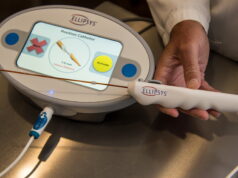

Vexev has announced the results of the CANSCAN trial evaluating the use of semi-autonomous ultrasound scanning utilising the VxWave ultrasound imaging system for arteriovenous fistula (AVF) mapping in dialysis clinics.
According to the company, the trial provides evidence that the VxWave system can reliably perform semi-autonomous vascular mapping examinations directly within the dialysis clinic. Varshi Broumand, interventional nephrologist at South Texas Renal Care Group (San Antonio, USA) and CANSCAN study principal investigator, presented the results during the American Society of Nephrology (ASN) annual meeting, Kidney Week 2025 (5–9 November, Houston, USA).
“Functioning vascular access is a lifeline for patients on haemodialysis, yet nearly three out of four arteriovenous fistulas fail to mature or are abandoned before use. While traditional vascular mapping scans have improved vascular access, they suffer from poor patient compliance due to being scheduled outside of dialysis appointments, often lack standardised quality and are expensive,” explained Broumand. “The CANSCAN trial highlights the potential that with the robotic VxWave system, we can finally bring high-quality vascular imaging on-demand in the dialysis clinic, overcoming barriers of cost, compliance, and variability that have limited patient outcomes for far too long.”
The multicentre feasibility trial scanned 115 patients with severe kidney damage or end-stage renal disease (CKD stage 4 and 5 patients) and the primary endpoints demonstrated a 94% Scan Completion Rate (SCR), 100% Data Adequacy Rate (DAR), and 98% of access options determined feasible in patients.
The VxWave system is a robotic tomographic ultrasound imaging system specifically designed for upper limb vascular imaging to be delivered on-demand at the point of care. The system integrates advanced robotics, machine learning and ultrasound signal processing to create a 3D vascular model and detailed report that aims to provide insights into vascular access points for haemodialysis.
“The success of the CANSCAN trial confirms that standardised, high-quality, point-of-care vascular assessment may now be achievable,” said Shannon Thomas, chief medical officer, Vexev. “The trial represents a significant step towards the future of standardised vascular assessment across the globe, allowing us to plan vascular access for haemodialysis with data-driven precision, especially for higher risk patients whose anatomical factors may complicate traditional planning.”
Beyond providing evidence of feasibility, the CANSCAN trial provided insights into the upper limb vascular anatomy of CKD stage 4 and 5 patients and identified subgroups who may be at a disadvantage for vascular access creation. Specifically, patients with diabetes had significantly more calcification in the upper limb arteries and a reduction in forearm distal vascular diameters. Furthermore, female patients were found to have statistically fewer available veins and smaller veins overall compared to males.
The VxWave system’s potential ability to standardise examinations would allow dialysis clinics to better determine subgroups who may be at a disadvantage for vascular access creation, ultimately aiming to reduce the high rates of access failure and dialysis dysfunction currently experienced by patients.
“This is one of the more promising innovations we’ve seen recently, and the results are encouraging,” said Geoff Block, associate chief medical officer and senior vice president, Clinical Research & Medical Affairs for US Renal Care. “They suggest real potential to improve patient outcomes. As access expands, we’re interested to see how an automated point-of-care imaging approach can enhance care across our network.”