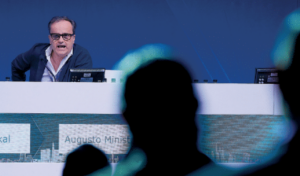
“Twelve-month results of the aXess [EU pivotal trial] show that the graft is safe to implant, supports early and effective dialysis use, and is associated with lower reintervention and infection rates when compared to ePTFE [expanded polytetrafluoroethylene] benchmarks.” So concluded Augusto Ministro (Lisbon, Portugal), presenting podium-first data on the aXess restorative vascular access conduit (Xeltis) at the 2026 Charing Cross (CX) Symposium (21–23 April, London, UK).
This prospective study was designed to investigate the patency, safety and performance of the aXess conduit in adult patients with end-stage renal disease requiring vascular access to start or maintain haemodialysis therapy. The trial enrolled 120 patients at 22 sites across nine European countries.
“Vascular access is still the Achilles’ heel of haemodialysis,” said Ministro. “We create it, we revise it, and—too often—we lose it.” The presenter yesterday shared 12-month data that he said, “will hopefully change the way we think about this problem”.
Ministro reported 34%, 49% and 79% rates of primary patency, primary assisted patency and secondary patency at 12 months, respectively. “Primary patency, as we know, is only part of the story,” he remarked. “What is clinically more meaningful is the possibility that the access could be maintained safely and effectively over time, and here we have a 79% secondary patency at 12 months that we believe is a very important finding.”
Ministro also revealed a “very low” reintervention rate of 1.3 per patient year, a 3% rate of clinically relevant access-related infection, and data demonstrating that the graft can be “safely and effectively used during common dialysis practice”.
“But what is particularly compelling about this graft is its behaviour over time,” Ministro continued. “Ultrasound suggests progressive compliance as the tissue remodels with the graft behaving less like a prosthesis and more like a living vessel. And this may help us explain its patency, infection resistance and sustained performance.”
In his closing remarks, Ministro stated that, “at 12 months, the graft appears to become a tissue-like pulsatile conduit, suggesting that we have here a new category of vascular access”.